
Hydraulic Pile Drivers: 8 Reliable Rigs for Deep Foundation Jobs 2026

Table of Contents
- 1. Introduction
- 2. Hydraulic Impact Pile Driver
- 3. Hydraulic Vibratory Pile Driver
- 4. Hydraulic Sheet Pile Driver
- 5. Excavator Mounted Hydraulic Pile Driver
- 6. Compact Hydraulic Pile Driver
- 7. Variable Energy Hydraulic Pile Driver
- 8. High Frequency Hydraulic Pile Driver
- 9. Lead Guided Hydraulic Pile Driver
- 10. Conclusion
- 11. Our Business Partners
1. Introduction
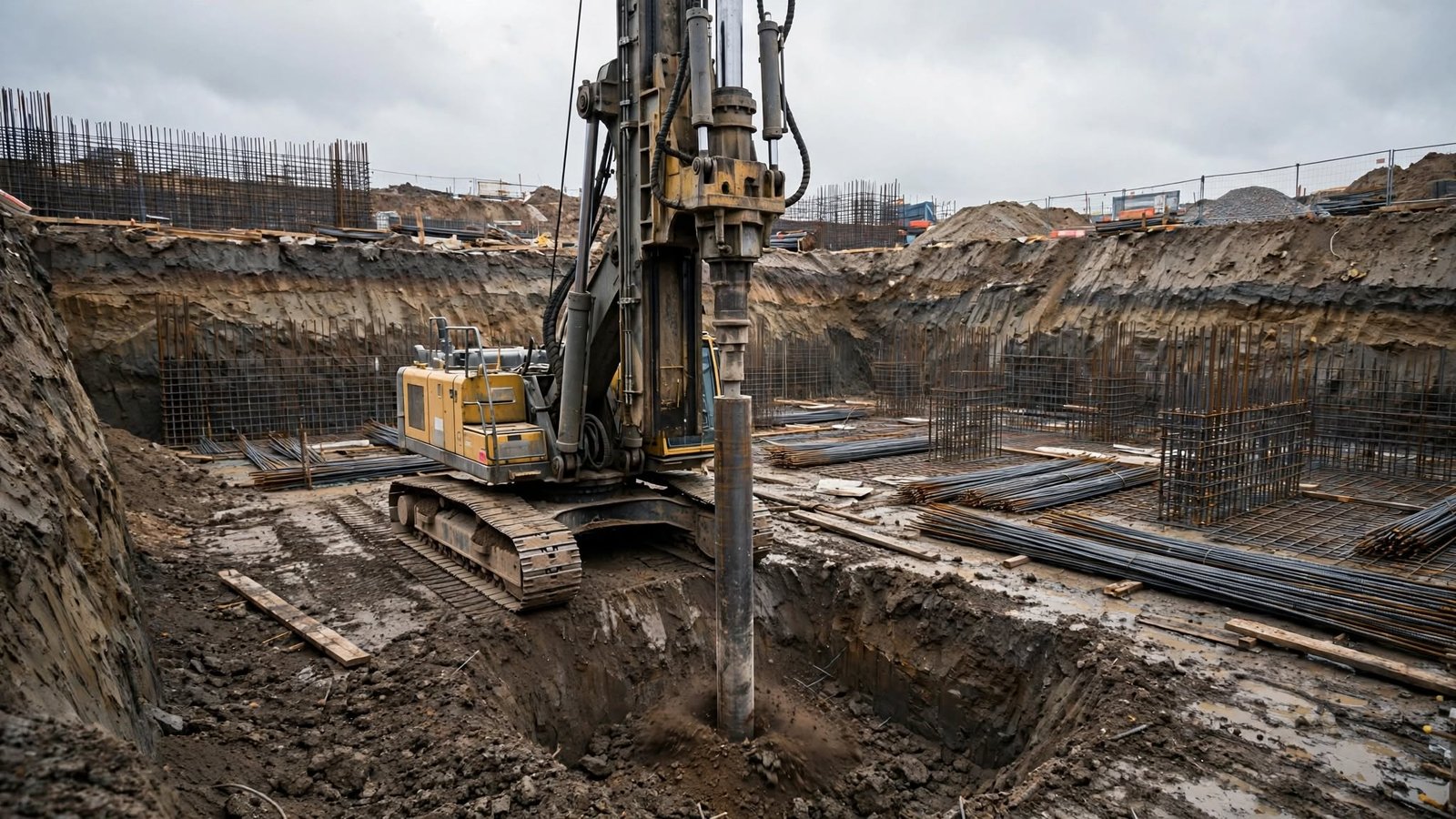
Hydraulic Pile Drivers are used to achieve deep foundations. The ram is raised and then released, and a hydraulic unit is used to regulate the impact force. Unlike previous hammers, this allows the driver to adapt the impact force depending on the sub-soil. It is often the deciding factor for whether a large project is completed on time, or if the machine is left unused due to uncooperative sub-soil. Modern Hydraulic Pile Drivers also safeguard the pile. Excessive impact forces damage both concrete and metal. Under-driving results in insufficient pile depth. Achieving the optimum impact force using proper Hydraulic Pile Drivers is fundamental and the correct machine will influence how easily this can be achieved. Below are 8 popular Hydraulic Pile Drivers and information on their ideal applications and things to note.
Hydraulic Impact Pile Driver
The main driver type. Again, a ram is raised and dropped. The hydraulic unit regulates the impact force. Delicate soils receive a gentler impact, and denser soils receive a heavier impact. As deep foundations are frequently installed in strata (where there is often variation in the sub-soil every few metres), these robust Hydraulic Pile Drivers are an especially suitable option. Both ram and anvil can become quite hard-wearing. A dulled anvil will siphon off impact energy and so the pile will cease to advance at an appropriate rate. Ideally, have a spare anvil available for extended projects – the cost of halting operations to replace a part outweighs the cost of the part. Consumption is fairly good in relation to output. Most Hydraulic Pile Drivers in this class operate for an entire day with good service.
Hydraulic Vibratory Pile Driver
Rather than impacting a pile, this driver vibrates it into position. Rapid rotations cause brief soil displacement. Sand and gravel particularly readily move aside and so allow the pile to easily sink. Commonly, these Hydraulic Pile Drivers are used for sheet and H-beam piles. However, it is slowed by firm clay and so operation must be carried out with patience. Compared to impact drivers, this is a quieter option – which is advantageous for urban areas. Similarly to impact, ease of extraction is good and often extraction alone covers the cost of using such Hydraulic Pile Drivers. Nevertheless, as vibration can impact surrounding structures, it is advisable to initially carry out a site survey. With unrestricted land and non-adjacent neighbours, this is often the quickest driver type.
Hydraulic Sheet Pile Driver
Whilst sheet piles lock together, they are not robust. Consequently, this driver is designed to insert sheets using a combination of vibration and mild pressure – not brute force. Furthermore, a clamping mechanism enables a firm, upright hold on the sheet so that locking is unaffected. Specialized Hydraulic Pile Drivers of this sort are often utilised within temporary works. Cofferdams are inserted and removed and, following installation of a permanent structure, retaining walls are extracted. If an impact hammer were to be used for sheet piles, locks could become distorted and water penetration may occur. By employing Hydraulic Pile Drivers specifically designed for sheet piles, this issue is avoided from the outset. Moreover, the driver incorporates a steering function which ensures the sheet remains vertical. This in turn reduces subsequent time spent aligning a retaining wall to plans. Often, as mentioned above, revenue from extraction offsets the cost of these Hydraulic Pile Drivers.
Excavator Mounted Hydraulic Pile Driver
As an excavator is commonly present on a site, it is economical to attach a hydraulic driver head to it. The excavator’s hydraulics power the hammer and the head is then removed to enable the excavator to dig. Fencing, signposts, light H-beams and small sheet piles can all be driven using these versatile Hydraulic Pile Drivers. Unfortunately, this driver is unable to handle deep foundations for high-rise buildings. Nonetheless, for utility and landscaping professionals, the multi-functionality of these Hydraulic Pile Drivers is highly advantageous. Rental companies always stock these heads as there is continual demand for them. Furthermore, it is straightforward to move them between sites. Prior to purchasing a head, assess your excavator’s hydraulics. An ill-fitting head is not only costly but also leads to poor performance. Appropriately combining an excavator with a driver head effectively converts a standard excavator into a valuable, light-duty piling device.
Compact Hydraulic Pile Driver
Poor site access adversely affects efficiency. This driver surmounts such issues. Being small in size, it can pass through gates and is suited to backyard areas where cranes cannot operate. Its rubber undercarriage is kind to patios and driveways. Moreover, the diminutive engine limits fuel consumption. Nevertheless, as impact energy levels are not high, these compact Hydraulic Pile Drivers are not suitable for major piling. Rather, it was designed for residential, decking and minor commercial foundation and support work. Indeed, for those involved in numerous small projects, these Hydraulic Pile Drivers can quickly recoup their cost. Typically, homebuilders hire these for one-off projects so again, there is constant rental demand throughout the year. In addition, as this driver exerts low ground pressure, it can be used on delicate lawns without causing deep indentations – an important consideration if the client is a homeowner.
Variable Energy Hydraulic Pile Driver
Unlike some drivers, this one allows the operator to alter impact energy levels on the move. Gentle impacts are used for yielding soils and maximum impact force is applied to denser soils. Alteration can be effected from within the driver cab and occurs rapidly. Projects involving various sub-soils in a single day particularly benefit from these adjustable Hydraulic Pile Drivers. Extra controls do increase servicing requirements but the versatility offered justifies this for bigger projects. Operators can even proactively modify the impact force by analysing the sub-soil via the controls. Such an approach is what differentiates trouble-free piling from problematic piling. Furthermore, energy consumption is reduced as these reliable Hydraulic Pile Drivers do not always need to operate at peak levels. Over an extended period of time, these reductions offset the increased initial cost of this driver.
High Frequency Hydraulic Pile Driver
Increased frequency is key for this driver type. In comparison to standard drivers, the heightened frequency results in quicker pile insertion rates. The quicker the frequency, the less time the sub-soil has to re-engage with the pile. Particularly favourable results are obtained with sandy and silty soils using high-speed Hydraulic Pile Drivers. As with the vibratory driver, noise levels are also reduced since energy is directed towards frequency rather than impact. Unfortunately, high frequency also accelerates deterioration of bearings and seals so more frequent servicing is necessary. Operators who diligently monitor running hours can maximise the lifespan of these Hydraulic Pile Drivers. Conversely, those who neglect servicing ultimately pay for this through repair bills. Simply record running times and adhere to lubrication guidelines to fully reap the benefits of this driver – enjoying trouble free, consistent year on year production.
Lead Guided Hydraulic Pile Driver
Without a lead frame, a ram can swing and so incorrect pile alignment can occur. This driver includes a lead frame which maintains pile uprightness. Bridge and marine operatives frequently utilise guided Hydraulic Pile Drivers for this very reason. Although setting up a lead frame is labour intensive (it must be positioned and verified), once set in motion, each pile is consistently aligned. Usually, the cost incurred from readjustment resulting from omitting lead frames exceeds the setup cost. Misalignment is quickly identified when caps are fitted and rectification is then costly. Plus, the lead frame shields the pile head from misaligned impacts so prolonging the life of both the pile and ram. On aquatic sites where it can take several hours to re-position a barge, precise pile alignment using advanced Hydraulic Pile Drivers can even save an entire day.
Conclusion
Selection of a suitable hydraulic driver depends upon the sub-soil, pile and site. Impact, variable energy and lead guided drivers are appropriate for particular soils. Vibratory drivers excel in sand and gravel based soils. Sheet piles require a specialised driver. Restricted site access is best dealt with by a compact driver. And, for smaller budgets, an excavator mounted head is economical. Bridge projects necessitate a lead frame for correct pile alignment. Therefore, by choosing the most befitting driver for a task, operations can proceed effortlessly. Underscoring the importance of this, applying an inappropriate driver to incorrect sub-soil causes every pile to effectively become a challenge. Prior to purchasing or hiring a driver, invest time in examining the soil report. For insights on alternative models, check out vibratory pile hammers 7 best models for faster installation. Despite any discounts available, this often proves to be a more economical course of action. Moreover, consult operatives who have experience of the driver type in question. Their grievances provide far greater insight than any brochure can. Appropriate drivers, for the correct application, both economically and problem free, justify their own cost through enhanced production.
Looking to round out your jobsite fleet? Beyond deep foundation work, many crews also need lifting and access equipment on the same site.
Explore the powerful TYPHON Machinery Mini Excavators range for safe, efficient operations alongside your foundation crew.
Our Business Partners
For more details on heavy machinery and to see our business partners at work, check out the video below: