
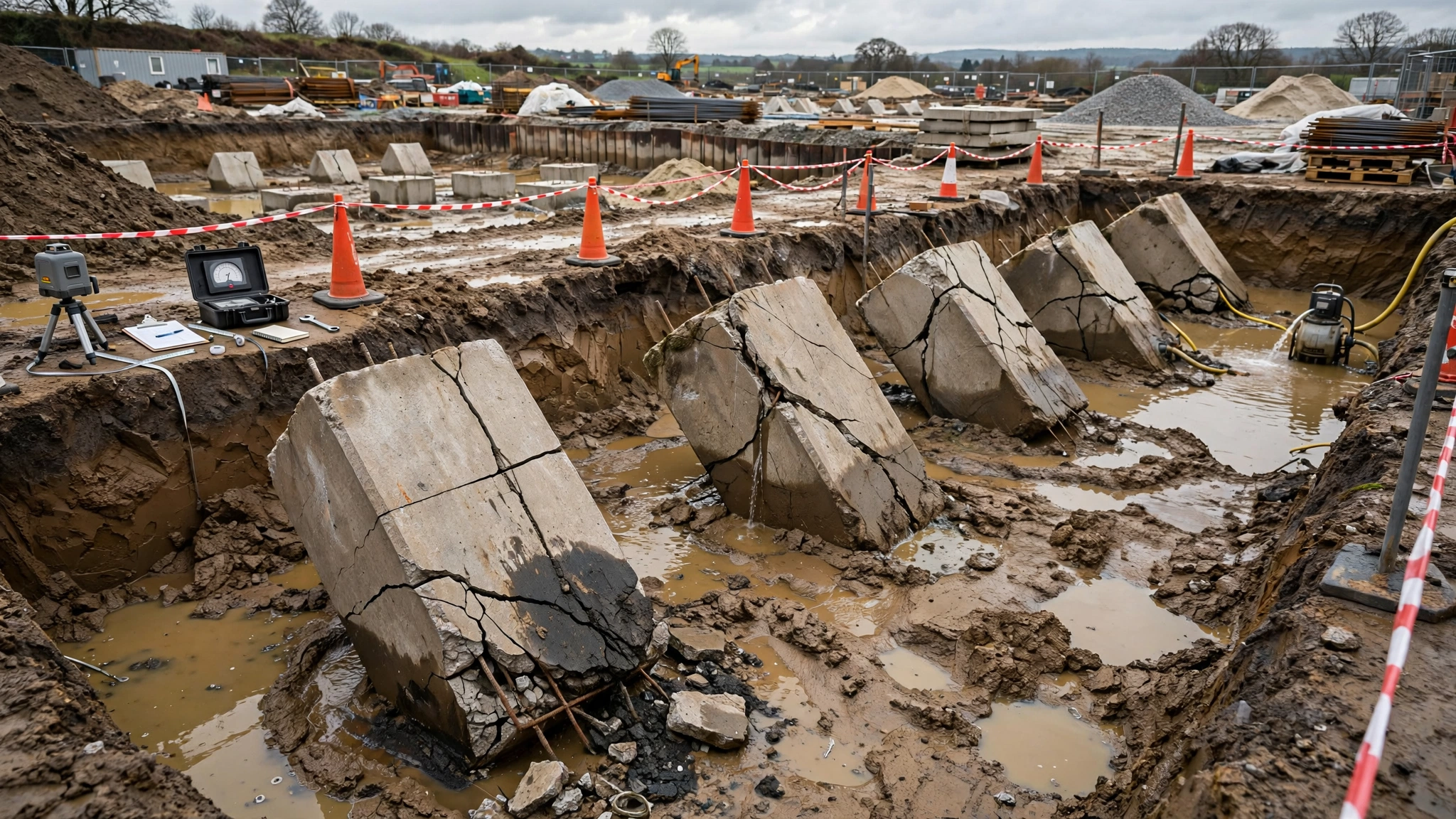
7 Warning Signs Your Pile Project Is Falling Apart (And How to Turn It Around)

Table of Contents
- 1. Introduction
- 2. Your Blow Count Is All Over the Place
- 3. Your Piles Are Going in Crooked
- 4. Your Cushions Are Burning Out Too Fast
- 5. The Hammer Is Making Weird Noises
- 6. Your Piles Are Splitting or Cracking
- 7. Your Schedule Is Slipping Badly
- 8. Your Crew Keeps Making the Same Errors
- 9. Wrapping It Up
- 10. Our Business Partners
1. Introduction
You have got the equipment on site. The crew is ready. The project timeline is set. And then everything starts falling apart.
Sound familiar? It happens more often than you would think. Pile driving looks straightforward from the outside. Drop a weight, drive a pile, move to the next one. But beneath that simple surface, there are dozens of ways things can go wrong.
I have watched a promising pile project turn into a nightmare because someone ignored the warning signs. I have seen budgets blown, schedules wrecked, and piles pulled out because they were driven wrong. The thing is, most of these disasters do not happen suddenly. They creep up slowly. Small problems that get bigger. Little signs that get ignored.
This guide walks you through seven clear warning signs that your pile project is heading for trouble. For a full breakdown on equipment, you can read this complete guide to pile driver equipment. More importantly, it gives you seven practical solutions to turn things around before it is too late.
Whether you are running a small foundation job or a massive bridge pile project, these signs will help you spot problems early. And the solutions will save you time, money, and a whole lot of headaches.
Let us get into it.
2. Your Blow Count Is All Over the Place
One of the first things any experienced operator watches on a pile project is the blow count. That is the number of hammer strikes it takes to drive your pile a certain distance, usually per foot.
When everything is going right, the blow count follows a predictable pattern. It starts low in soft soil, then gradually increases as the pile hits denser ground. It is steady. It makes sense.
But when things start going wrong, the blow count gets erratic. One foot takes ten blows. The next foot takes thirty. Then it drops back to twelve. No rhythm. No logic. Just chaos.
What This Means
Erratic blow count tells you something is not right underground. Could be a buried boulder. Could be a soft pocket of soil. Could be your pile is hitting something it should not.
Sometimes it means your hammer is misfiring. Or the cushion is worn out. Or your operator is not keeping a consistent stroke.
Either way, unpredictable blow count is a red flag. Ignore it and you will end up with piles that are not seated properly. Some will be overdriven. Some will be underdriven. None of them will carry the load they are supposed to for the pile project.
What to Do About It
Stop driving immediately. I know you want to keep moving, but do not. Take a moment and figure out what is going on.
Pull your driving records and look at the pattern. Check your hammer settings. Inspect the cushion and the helmet. If nothing is wrong with your equipment, you need to look at what is underground.
Bring in a geotechnical engineer if you have to. Drill a test hole near the problem spot. Find out what is down there. Sometimes you need to pre-drill through a hard layer. Sometimes you need to switch to a different driving method.
The fix might cost you a day. Ignoring the problem will cost you a lot more.
3. Your Piles Are Going in Crooked
You set up your leads perfectly. You checked the alignment twice. You started driving straight down. And somehow, your pile is still going in at an angle.
Pile drift is one of those problems that drives operators crazy on any pile project. You do everything right and the pile still wanders off to the side. It happens more than most people admit.
Sometimes it is subtle. Just a few inches over twenty feet. But even a small drift can be a huge problem. A crooked pile does not carry weight properly. It puts stress on the structure. It can fail under load.
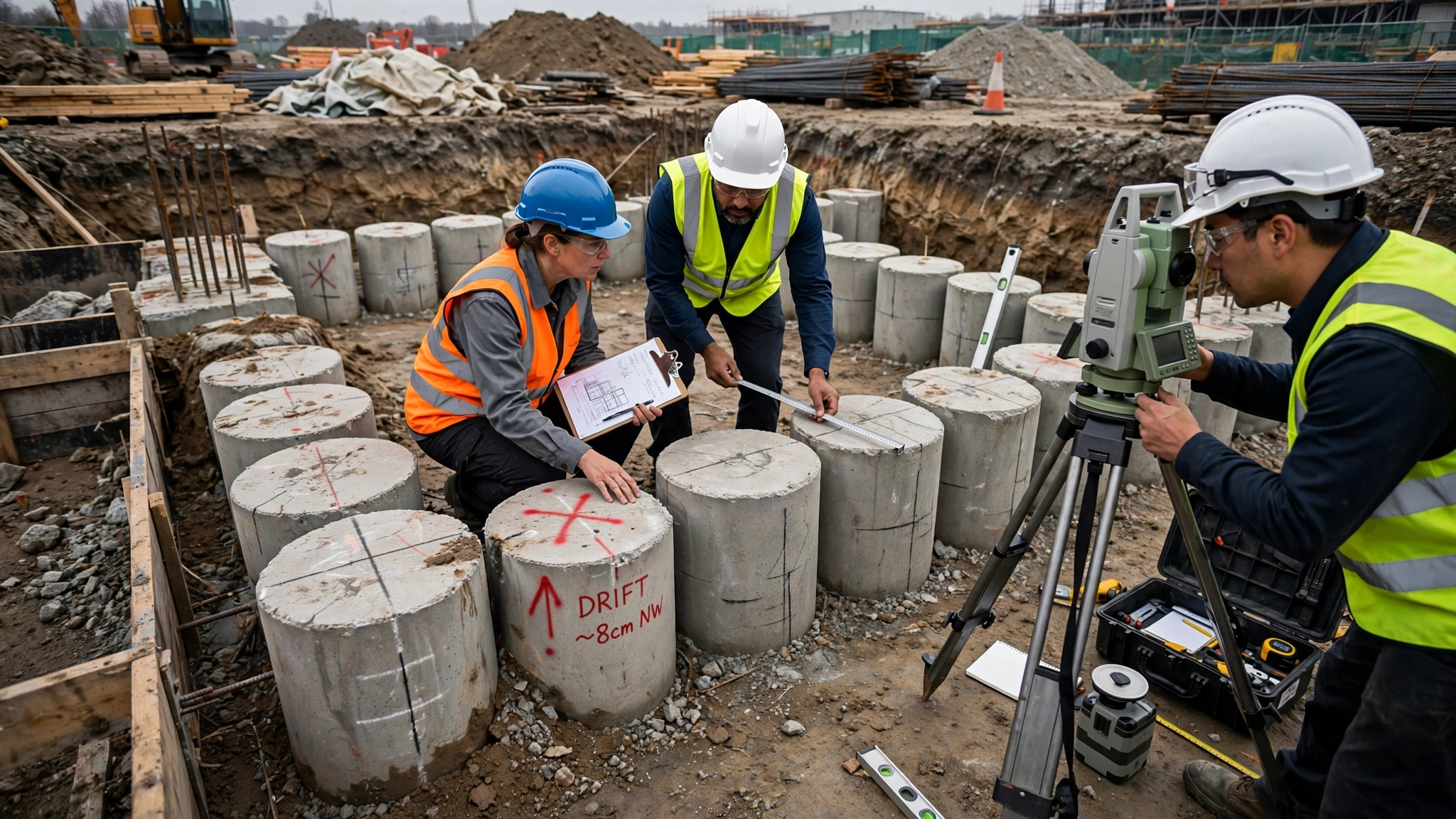
What This Means
When your piles go off course, there are usually three culprits.
First, your leads might be out of alignment. Even a tiny angle at the top becomes a big shift at the bottom. Check your leads again. Check the base machine. Make sure everything is plumb.
Second, your hammer might be hitting off-center. If the helmet is not sitting square on the pile head, the blow goes sideways. That shoves the pile sideways.
Third, the soil itself might be pushing your pile around. Hard layers can deflect the pile. Boulders can knock it off course. Soft spots can let it tilt.
What to Do About It
Start with your equipment. Check lead alignment again. Sometimes it shifts during the day and you do not notice. Realign everything and start fresh.
Look at your helmet and cushion. Make sure they are centered on the pile head. If they are worn or uneven, replace them. A crooked helmet gives you a crooked pile.
If your equipment is fine, look at the ground. You might need to pre-drill a pilot hole to guide the pile. Or you might need to switch to a smaller pile that can navigate around obstructions.
Catching drift early is key. The longer you let it go, the worse it gets. And pulling out a crooked pile is expensive and delays your pile project.
4. Your Cushions Are Burning Out Too Fast
Cushions are those pieces of padding between your hammer ram and the pile. They absorb shock and protect both the hammer and the pile from damage.
Every pile project goes through cushions. They wear out. You replace them. That is normal.
But when you are burning through cushions way faster than you should, something is wrong. I have seen crews go through three sets of cushions in one shift. That is not normal. That is a warning.
What This Means
Rapid cushion wear usually means your hammer energy is too high for the pile you are driving. You are hitting too hard. The cushion takes the abuse instead of the pile.
It could also mean your cushion is the wrong material for the job. Some piles need soft cushions. Others need hard ones. Using the wrong type will chew them up fast.
Either way, the cushion is telling you something. It is sacrificing itself to protect your pile. Listen to it.
What to Do About It
Switch to a harder or softer cushion depending on what you are driving. Sometimes you just need a different material.
More importantly, check your hammer energy settings. You might be driving with too much force. Back off the stroke length. Reduce the power. Let the hammer work more gently.
If you keep burning through cushions without adjusting your settings, you will eventually crack a pile. And cracked piles are expensive to pull out and replace, threatening your pile project timeline. Fix the cushion issue now.
5. The Hammer Is Making Weird Noises
Your hammer makes noise. That is normal. But there is a difference between normal hammer noise and sounds that tell you something is broken.
A diesel hammer has a certain rhythm. Hydraulic hammers have their own sound. Experienced operators know what their equipment is supposed to sound like.
When that sound changes, pay attention. Maybe the hammer is misfiring. Maybe the ram is sticking. Maybe something inside is about to break. The noise is trying to tell you something.
What This Means
Strange noises usually point to mechanical problems inside your hammer.
Misfiring could mean fuel issues in a diesel hammer. Or hydraulic problems in a hydraulic unit. Grinding sounds suggest worn bearings. A dull thump means the ram is not falling properly.
Sometimes the noise comes from outside the hammer. Whipping piles make a distinct sound. Worn leads can clatter. Loose helmets rattle.
What to Do About It
Stop driving and do a full inspection. I know you want to keep going but do not. A broken hammer on a pile project site is a disaster. Fixing a small problem now is way easier than rebuilding a destroyed hammer later.
Check your fuel system. Check your hydraulics. Check your leads and guides. Tighten anything that is loose. Replace anything that is worn.
And trust your operator. If they say something sounds wrong, believe them. They have been listening to that hammer all day. They know what it should sound like.
6. Your Piles Are Splitting or Cracking
Nothing will ruin your day like watching a concrete pile split in half while you are driving it. But it happens. More than you would think.
Sometimes the cracks are obvious. You see a big split running down the side. Sometimes they are hidden. Hairline fractures you do not notice until later. Both are bad news.
Cracked piles are useless for your pile project. They cannot carry the load. They have to be pulled out and replaced. That is expensive. That is time-consuming. That is a disaster for your pile project.
What This Means
When your piles crack, your hammer energy is too high. You are hitting too hard for the pile material.
It can also mean your cushion is worn out and not absorbing shock. Or your helmet is not centered, so the blow hits the pile at an angle instead of straight down.
Sometimes it is not your equipment. Maybe the pile itself is defective. Poor quality concrete. Imperfect steel. Bad manufacturing.
What to Do About It
First, check your cushion. If it is worn, replace it immediately.
Second, reduce your hammer energy. Back off the stroke. Use less force. It is better to drive a pile slowly than to drive it fast and crack it.
Third, inspect every pile before you drive it. Look for hairline cracks or manufacturing defects. If a pile looks suspicious, do not use it. Send it back.
And if you keep cracking piles, switch to a different hammer or a different pile material. Steel piles handle high energy better than concrete. Sometimes you just need to change your approach.
7. Your Schedule Is Slipping Badly
Every construction pile project has delays. Weather. Equipment breakdowns. Material shortages. A little slip here and there is normal.
But when your timeline starts slipping badly, pay attention. You planned to do fifty piles a day. You are lucky to get twenty. Your schedule is falling apart.
This is a warning that goes beyond the schedule. It tells you something systemic is wrong with your operation. Maybe your equipment choices are wrong. Maybe your crew is not trained. Maybe your soil conditions are worse than you expected.
What This Means
When your progress slows down dramatically, your pile project economics change. Labor costs go up. Equipment rental costs go up. Other trades get delayed. Your profit margin shrinks.
Sometimes the slowdown is obvious. Your hammer keeps breaking down. Your piles keep cracking. Your operator is inexperienced.
Sometimes it is less obvious. Your pile selection is wrong for the soil. Your hammer is underpowered for the job. Your site layout is inefficient.
What to Do About It
Stop and reassess. Call a meeting with your crew. Look at your numbers honestly. Why are you behind?
If your equipment is wrong, change it. If your operator needs training, provide it. If your soil is tougher than expected, adjust your method.
Sometimes the solution is expensive. You might need to rent a bigger hammer. You might need to pre-drill every hole. You might need to bring in more experienced labor.
But the alternative is worse. A pile project that drags on forever burns money. Fix the problem now and get back on track.
8. Your Crew Keeps Making the Same Errors
You have told them twice. You have shown them three times. And they are still doing it wrong.
Maybe they keep misaligning the leads. Maybe they forget to check the cushion. Maybe they are not recording blow counts properly. Whatever it is, the mistakes keep happening.
This is the most dangerous warning because it tells you your crew does not understand what they are doing. And an untrained crew on a foundation job is a recipe for disaster for your pile project.
What This Means
When your crew repeats mistakes, you have a training problem. Either they do not know the right way to do things, or they do not care.
Sometimes it is not their fault. Maybe you hired inexperienced workers. Maybe you did not give them proper training. Maybe the job site is chaotic and they are overwhelmed.
Sometimes it is their fault. Some crews just do not take pride in their work. They cut corners. They rush. They ignore safety.
Either way, the problem is yours to fix. You are responsible for what happens on your job site.
What to Do About It
Stop the job and retrain your crew. Go back to basics. Show them how to align the leads. Show them how to inspect cushions. Show them how to read blow counts.
If certain workers cannot learn, replace them. It sounds harsh, but a bad crew will destroy your pile project. You are better off bringing in experienced help even if it costs more.
Create checklists for every task. Make your crew sign off on each step. Hold them accountable for their work. A clear process with clear expectations goes a long way on a pile project.
And if the problem is attitude, not skill, deal with it directly. Sit the crew down and explain the stakes. This is not just about getting the job done. It is about safety. It is about quality. It is about professional pride.
A good crew knows their stuff. They watch out for problems. They catch mistakes before they become disasters. If your crew is not doing that, something has to change.
9. Wrapping It Up
Pile driving looks simple from the outside. But anyone who has spent time on a job site knows better. There are a hundred ways things can go wrong. And most of them give you warning signs before they become disasters for your pile project.
The seven warnings we covered here are the ones I see most often. Erratic blow counts. Crooked piles. Burning through cushions. Strange hammer noises. Cracked piles. Slipping schedules. Repeated crew errors.
Each one is a red flag. Each one tells you something is wrong. And each one has a solution.
The key is catching these warnings early. Do not ignore them. Do not hope they will go away. Address them head-on. That is how you save your pile project.
Your hammer is a powerful tool. It can build incredible things. But only if you use it right. Watch for the warning signs. Listen to your equipment. Trust your crew. And when something feels off, stop and figure it out.
That is how you avoid disaster. That is how you get the job done right.
Looking to round out your jobsite fleet? Beyond deep foundation work, many crews also need lifting and access equipment on the same site.
Explore the powerful TYPHON Terror XVII Pro Prestige Edition 4000-lb Enclosed Mini Excavator with Kubota Power & Advanced Hydraulics for safe, efficient operations alongside your foundation crew.
10. Our Business Partners
For more details on heavy machinery and to see our business partners at work, check out the video below: