
Pile Driver 101: The Complete Guide to Equipment, Types & Techniques for 2026

Table of Contents
- 1. Introduction
- 2. What Exactly Is a Pile Driver?
- 3. The Basic Parts
- 4. How It Works
- 5. Why Pile Drivers Matter
- 6. Why Do We Need a Pile Driver?
- 7. Types of Pile Drivers
- 8. Which One Should You Choose?
- 9. The Physics Behind the Power
- 10. What Can Go Wrong
- 11. Soil Types and Your Choice
- 12. Safety Rules
- 13. Impact vs. Rotary – The Decision
- 14. What’s New in 2026
- 15. Conclusion
- 16. Our Business Partners
1. Introduction
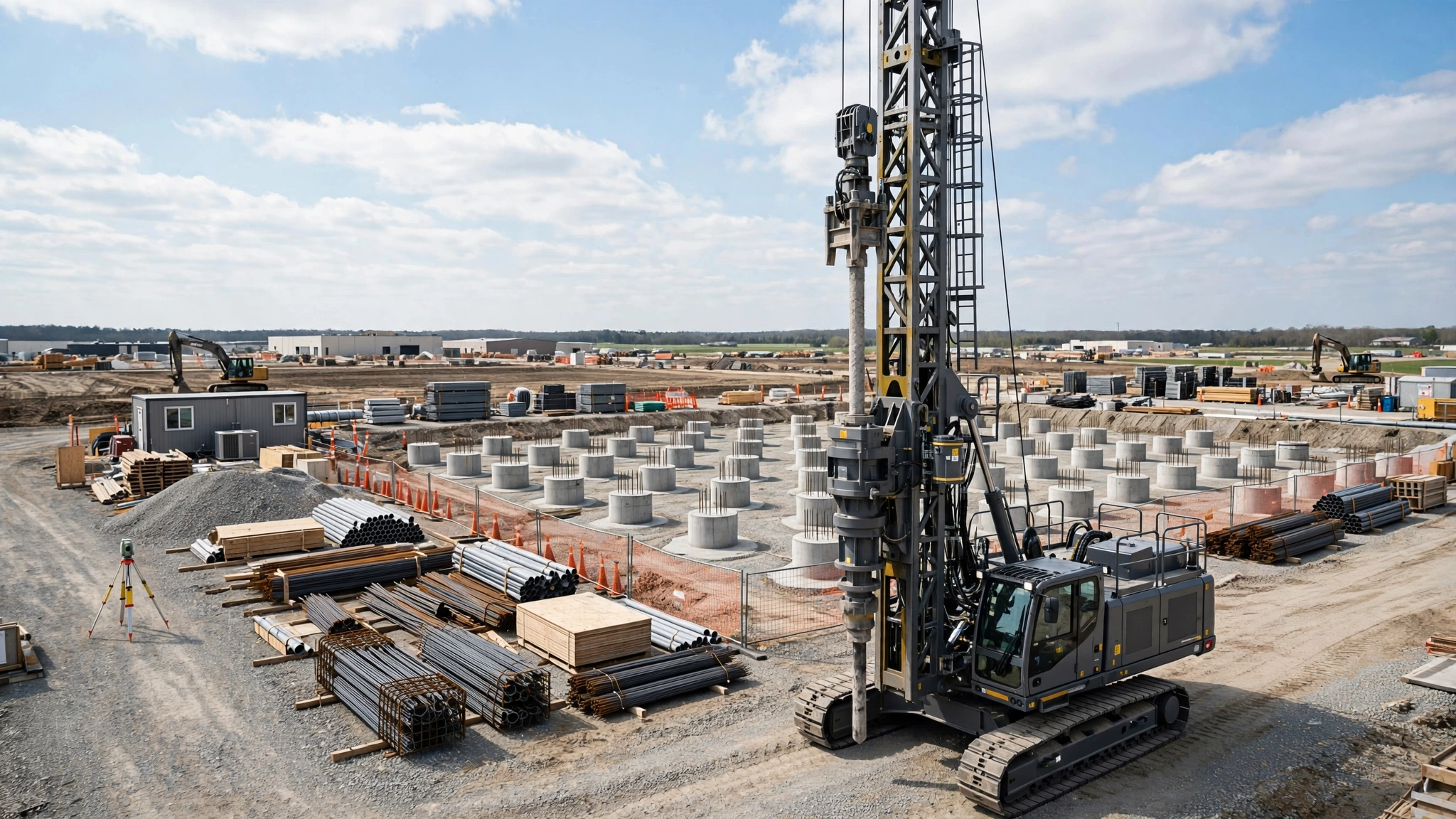
Ever stood near a construction site and watched those big machines pounding steel beams into the ground? That banging sound you hear? That is a pile driver at work. These machines are the reason our cities stay standing. Without them, most of what we build would simply sink into the earth.
So what does a pile driver actually do? It drives piles into the ground. Piles are those long steel, concrete, or timber columns you see sticking out of the ground before a building goes up. They carry all the weight of the structure down to solid ground. The pile driver keeps hitting them until they reach a depth where the soil is strong enough to hold everything up.
Sounds straightforward, does not it? It is. But getting it right takes years of experience. Pick the wrong pile driver and you will burn through your budget before lunch. Set it up carelessly and your piles will go in at weird angles. Crank up the power too high and you will split the pile in half.
I have watched crews make all of these mistakes. This guide will help you steer clear of them.
2. What Exactly Is a Pile Driver?
A pile driver is simply a machine that pushes piles into the ground. That is its whole purpose. For more detailed definitions, you can read our complete A to Z guide on what a pile driver is. It does this in one of three ways: by slamming the pile with a heavy weight, by shaking it with vibration, or by drilling a hole and pouring concrete into it.
The pile keeps going down until it hits ground sturdy enough to support the structure above. Once the pile hits that layer, the pile driver shuts off and moves to the next spot.
3. The Basic Parts
Every pile driver has these pieces:
- The Hammer: This is the part that delivers the punch. It might be a weight that drops, a piston that fires, or spinning weights that shake.
- The Ram: This is the actual weight inside the hammer that smacks the pile. A heavier ram packs more punch.
- The Leads: These are the vertical tracks that guide the hammer and keep the pile straight.
- The Winch: This drum pulls the hammer up and lets it down.
- The Base Machine: This is the crane or rig that holds the whole setup.
- The Helmet & Cushion: Spreads the blow evenly and soaks up shock so you do not crack the pile.
4. How It Works
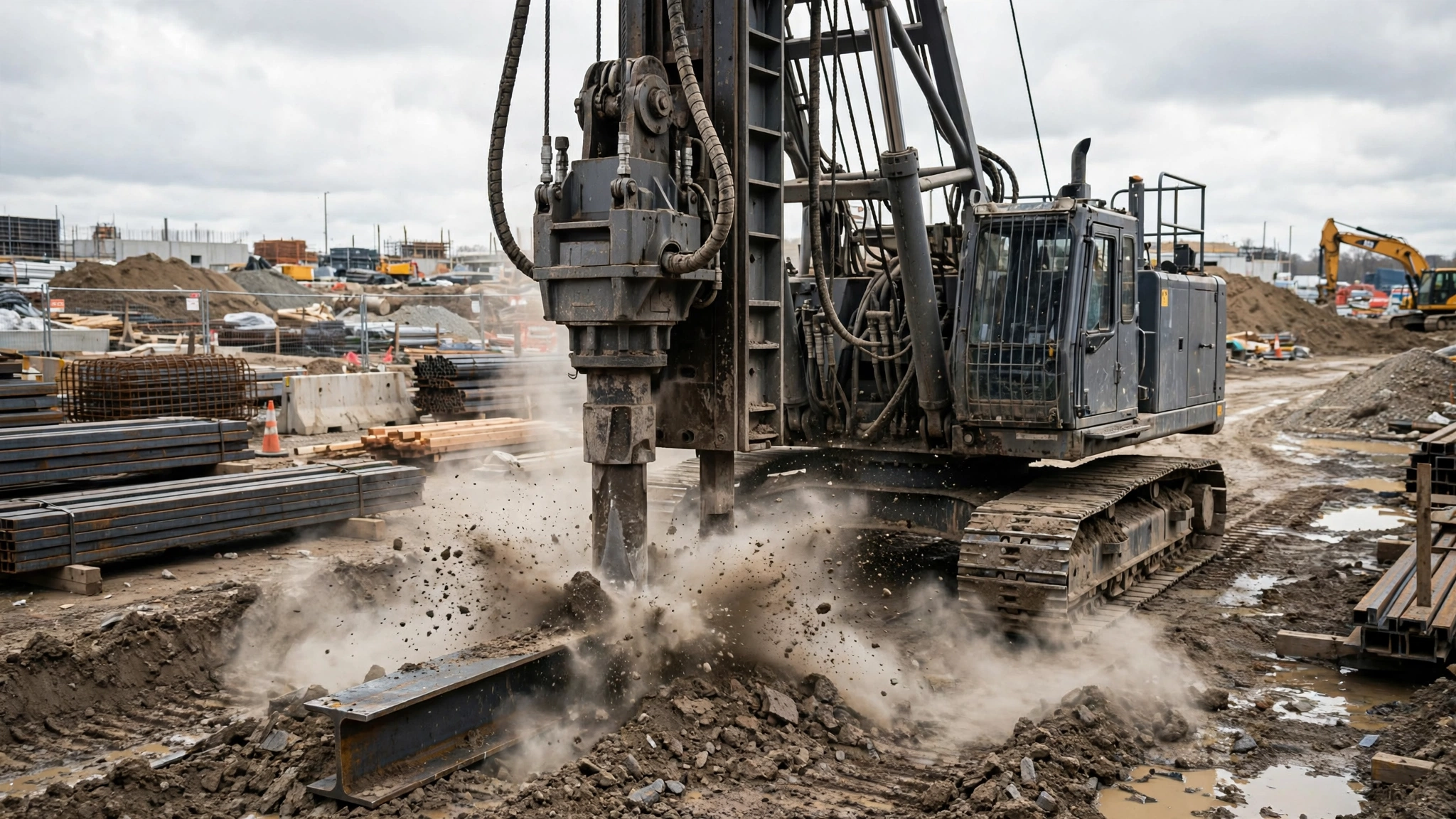
Here is what goes down every time a pile driver hits: The winch hoists the ram up to the right height, the ram drops or fires downward, slams into the helmet sitting on top of the pile, and the force sinks the pile deeper into the ground.
The operator keeps an eye on two things: Blow Count (hits it takes to drive a certain distance) and Set (how far the pile sinks with each hit). A skilled operator reads these numbers like a pilot reads instruments.
5. Why Pile Drivers Matter
Without a pile driver, forget about building on soft ground. Think about putting a skyscraper on mud. It would sink. The pile driver fixes all of these headaches. It shoves piles down past the garbage soil to the solid ground underneath.
Every big structure you have ever laid eyes on started with a pile driver. The foundation comes first, and the pile driver makes that foundation possible.
6. Why Do We Need a Pile Driver?
You might wonder, why not just dig a hole and fill it with concrete? Sometimes you can do that, but in weak surface soils, high water tables, or for heavy loads, digging just does not cut it. A pile driver punches piles right through weak layers, doesn’t care about water, and supports deep foundations for earthquake protection.
7. Types of Pile Drivers
Not every pile driver is the same. Different machines for different jobs. Impact Hammers (like Diesel and Hydraulic) are old-school but powerful. Vibratory Hammers shake the pile into the ground, which is quick in sand and gravel. Rotary Drilling Rigs drill holes and fill them with concrete without the noise of pounding.
8. Which One Should You Choose?
That depends on your site. Soil type, noise limits, pile type, budget, timeline. Here is the short version:
| Soil Type | Best Pile Driver |
|---|---|
| Sand and gravel | Vibratory or impact |
| Clay and silt | Impact or rotary |
| Rock and hardpan | Impact or rotary |
| Mixed or layered | Rotary |
| Urban site | Rotary or vibratory |
| Marine | Impact with underwater capability |
9. The Physics Behind the Power
Understanding the physics helps you pick the right pile driver. A heavier Ram Weight means more muscle. A longer Stroke Length means more wallop per blow. The Energy Per Blow is the total oomph delivered to the pile.
10. What Can Go Wrong
Even old hands mess up with a pile driver. Using mismatched equipment, skipping site investigation, picking the wrong hammer size, or ignoring bad lead alignment can stop a project cold. Worn cushions and ignoring environmental rules are also costly mistakes.
11. Soil Types and Your Choice
The soil decides everything. Vibratory hammers work great in Sand and Gravel. In Clay and Silt, you need impact or rotary. For Rock and Hardpan, impact or rotary are the only options. Urban sites usually require rotary or vibratory to keep noise down.
12. Safety Rules
A pile driver is dangerous. Always wear personal gear like hard hats, steel-toe boots, and ear protection. Keep people out of the swing radius, mark exclusion zones, and inspect cables and hydraulic lines every day.
13. Impact vs. Rotary – The Decision
Here is a simple comparison to help you choose.
| Factor | Impact Driving | Rotary Drilling |
|---|---|---|
| Soil Type | Drivable soils to firm strata | Dense, mixed, rocky |
| Noise | High | Low |
| Vibration | High | Low |
| Pile Type | Pre-made driven piles | Cast-in-place shafts |
| Bearing Proof | Yes (by blow count) | No (relies on design) |
| Speed | Fast | Slower |
| Cost | Lower per pile | Higher per pile |
| Best For | Open sites, speed, cost | Urban sites, hard ground |
14. What’s New in 2026
The pile driver industry keeps changing. Computers now run automated systems to fine-tune energy. Electric power is catching on for lower emissions, and real-time monitoring sensors track everything to give you better data on site.
15. Conclusion
The pile driver is the backbone of modern construction. It turns impossible jobs into routine ones. Choosing the right machine saves you time and money. The pile driver is your partner in building things that last. Take care of it and it will take care of you.
Looking to round out your jobsite fleet? Beyond deep foundation work, many crews also need lifting and access equipment on the same site.
Explore TYPHON Machinery’s Mini Excavator range for safe, efficient operations alongside your foundation crew.
16. Our Business Partners
For more details on heavy machinery and to see our business partners at work, check out the video below: