
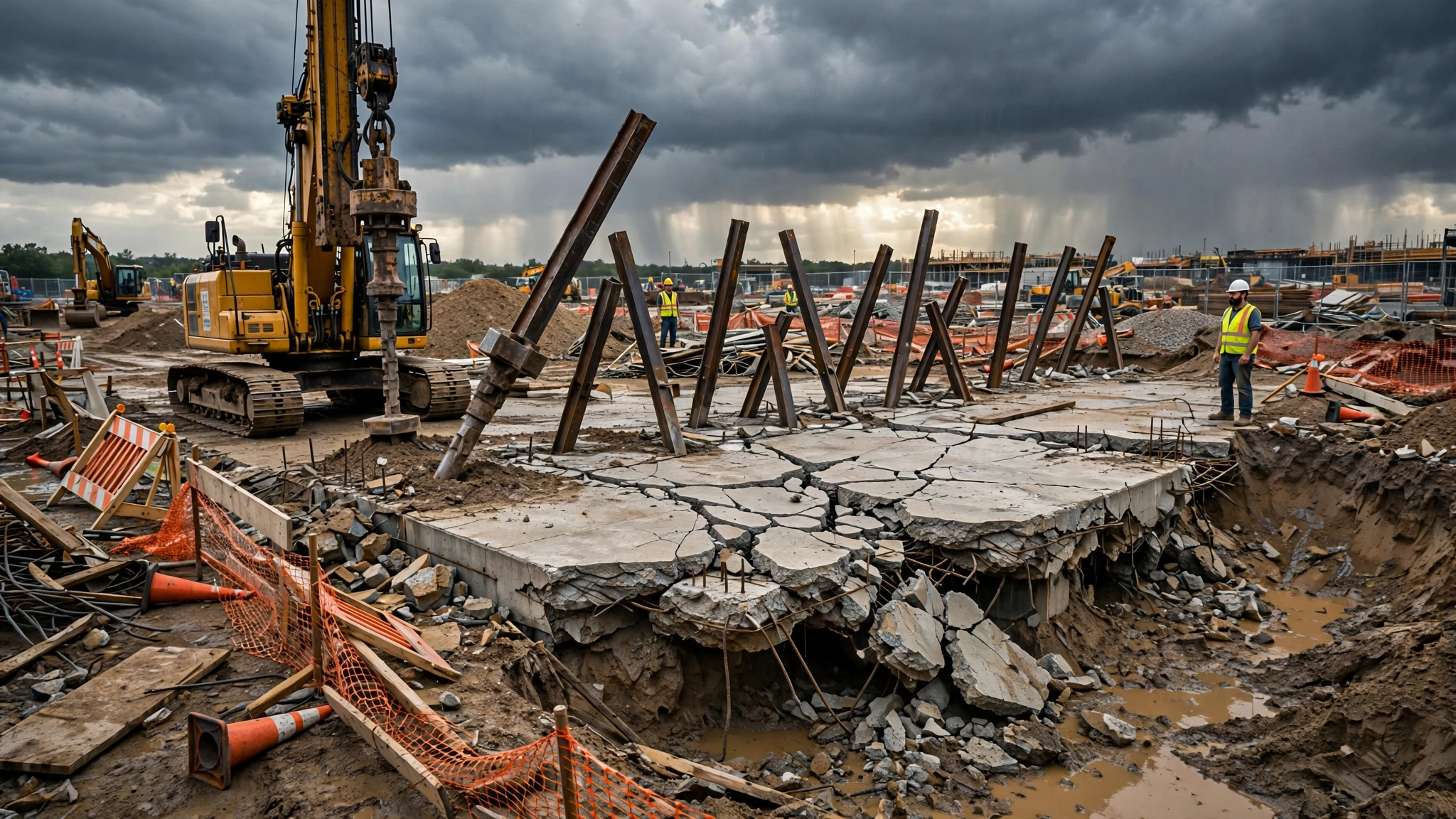
10 Critical Mistakes That Will Ruin Your Pile Project (And How to Avoid Them)

Table of Contents
- 1. Introduction
- 2. Skipping the Site Investigation
- 3. Choosing the Wrong Equipment
- 4. Ignoring Blow Count Changes
- 5. Misaligning the Leads
- 6. Forgetting to Replace Worn Cushions
- 7. Overdriving or Underdriving Piles
- 8. Ignoring Environmental Regulations
- 9. Using Inexperienced Operators
- 10. Failing to Plan for Delays
- 11. Neglecting Crew Training
- 12. Wrapping It Up
- 13. Our Business Partners
1. Introduction
You have got the equipment lined up. The crew is ready to go. The timeline looks solid. And then out of nowhere, your pile project starts falling apart.
I have seen it happen more times than I care to count. A job that should have taken two weeks drags on for a month. Piles that should have gone in straight end up crooked. Budgets that seemed generous get blown to pieces.
The worst part? Most of these disasters could have been avoided. The warning signs were there. Someone just did not pay attention.
After years of watching crews make the same mistakes over and over, I have put together this list of the ten most common errors that destroy a foundation job. More importantly, I will tell you exactly how to steer clear of each one.
Some of these mistakes seem obvious once you hear them. Others are sneaky. They creep up on you when you least expect them. But all of them can wreck your pile project if you let them.
This guide is for anyone running a pile project, whether you are a seasoned contractor or just getting started. The information here comes from real job sites, real problems, and real solutions. No theory. No fluff. Just practical advice that works.
Let us get started.
2. Skipping the Site Investigation
You would be amazed how many crews show up without doing proper site investigation. They assume the ground is fine. They assume there are no utilities. They assume nothing will go wrong. Those assumptions will kill your job.
I watched a crew start driving piles on what they thought was empty land. Turned out there was a massive sewer line three feet down. They found it the hard way. The pile project stopped for two weeks while repairs were made and lawsuits got filed.
Another time, a crew hit a buried boulder on the first blow. They had no idea it was there because nobody bothered to drill test holes. That boulder cost them three days and a broken hammer.
Why This Happens
Site investigation takes time. It costs money. Some people think they can skip it to save a few bucks. They are wrong. Soil conditions vary wildly from one spot to the next. You might have soft clay in one corner and dense gravel twenty feet away. A piling crew needs to know exactly what is down there before the first pile goes in.
How to Avoid It
Do not skip the investigation. Ever. Drill test holes at regular intervals across your site. Map out what is underground. Check for utilities, rock layers, water tables, and anything else that might cause problems.
Bring in a geotechnical engineer if you need to. Yes, it costs money. But it is cheap compared to the cost of fixing a disaster on your site.
And do not assume the ground is the same everywhere. Test multiple spots. Conditions can change dramatically over a short distance. You want to know about those changes before your pile project starts.
3. Choosing the Wrong Equipment
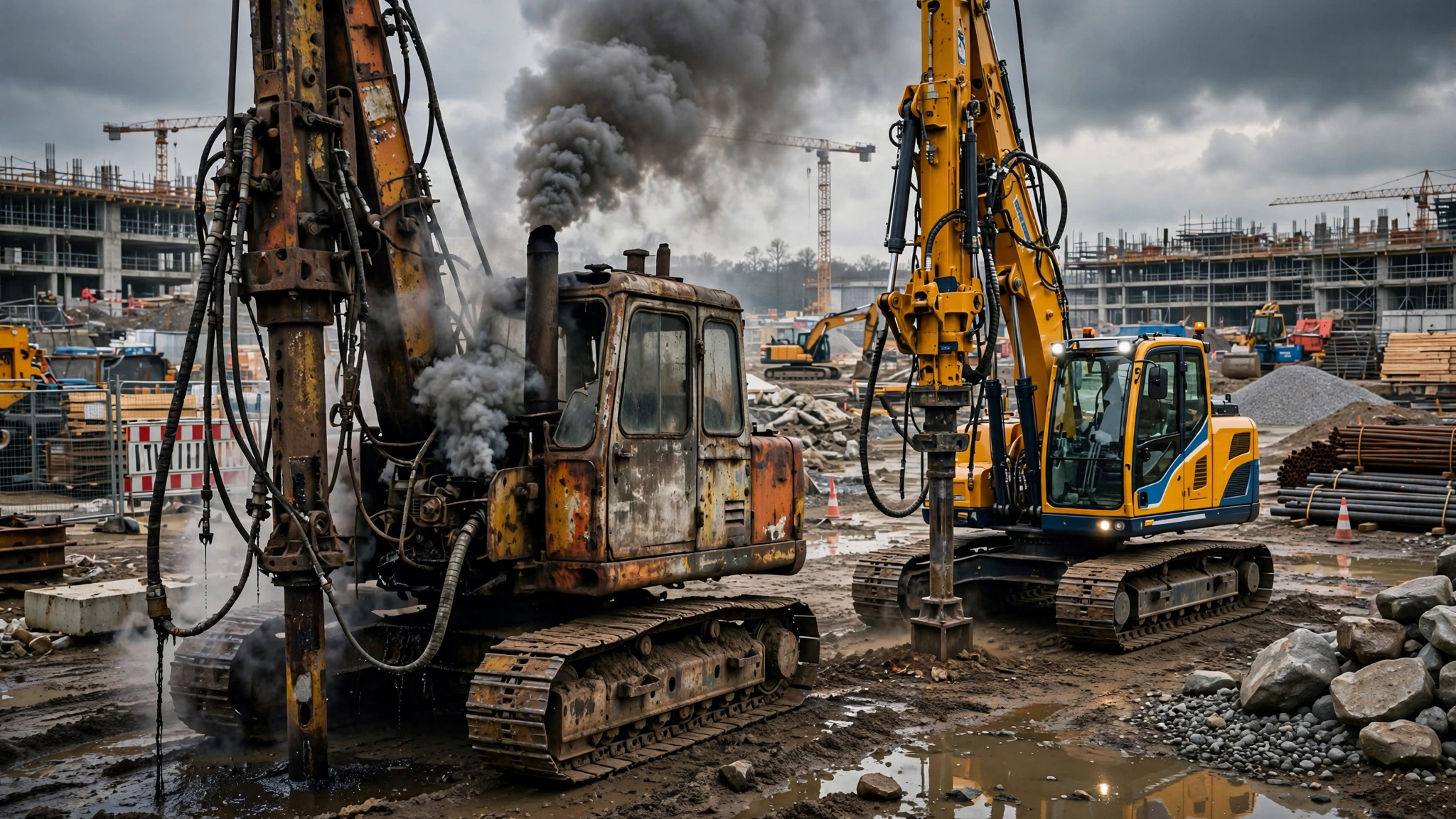
Here is a mistake I see on almost every troubled pile project. Someone picks the wrong hammer for the job.
Maybe they bring a vibratory hammer to a clay site. That never works. Clay does not vibrate well. You will stand there shaking the pile all day and get nowhere. Your timeline will fall hopelessly behind.
Maybe they bring an underpowered impact hammer to a hard rock site. The pile stops moving after a few feet. The crew keeps pounding, hoping something will change. Nothing changes except the repair bills.
Maybe they bring a massive hammer to a site with fragile concrete piles. The piles crack on the first blow. Now your pile project has to stop while you order replacements.
Why This Happens
Equipment selection requires knowledge. You need to understand soil types, pile materials, and hammer capabilities. Many people either do not have that knowledge or they ignore it in favor of whatever equipment is cheapest or most available.
Some people think one hammer works for everything. It does not. Every pile project has unique requirements.
How to Avoid It
Match your equipment to the job. Start by understanding your soil. Sand and gravel? Vibratory works well. Clay and silt? You need impact or rotary. Rock? Only heavy impact or rotary will do.
Match your hammer energy to the pile. Concrete piles cannot handle the same force as steel piles. If you crack a pile, your work stops. Period.
Do not be afraid to rent specialized equipment for a specific pile project. The rental cost is nothing compared to the cost of failure.
4. Ignoring Blow Count Changes
The blow count tells you everything about what is happening underground. It is your eyes and ears on a pile project. Ignoring it is like driving with your eyes closed.
Blow count is the number of hammer strikes it takes to drive the pile a certain distance. Usually measured per foot. When the blow count rises steadily, you know the pile is hitting denser soil. That is good. That is what you want.
But when the blow count jumps around erratically, something is wrong. One foot takes ten blows. The next takes forty. Then it drops back to fifteen. This tells you the ground is inconsistent. Maybe there are boulders. Maybe there are soft pockets. Whatever it is, your crew needs to know about it.
Why This Happens
Sometimes operators are not paying attention. Sometimes they do not know what to look for. Sometimes they just do not care.
But ignoring blow count changes can wreck your pile project. You might overdrive a pile and damage it. You might underdrive a pile and fail to reach bearing. Either way, the foundation is compromised.
How to Avoid It
Train your operator to watch blow count obsessively. Record every measurement. Look for patterns. If something changes, investigate immediately.
If blow count rises faster than expected, you might be hitting an obstruction. Stop and figure out what is down there. Do not keep pounding. That is how equipment breaks and piles crack.
If blow count drops suddenly, you might have hit a soft layer. That could mean the pile is not seated properly. Your team needs to address this before moving on.
Blow count is not optional. It is essential. Any successful pile project treats it that way.
5. Misaligning the Leads
Here is a problem that happens on almost every project at some point. The leads get out of alignment and nobody notices until the pile is already crooked.
The leads are those vertical rails that guide the hammer and keep the pile straight. They need to be perfectly plumb. A tiny angle at the top becomes a big shift at the bottom.
I have seen piles drift several feet off course because the leads were slightly tilted. The crew did not catch it until the pile was already twenty feet down. Fixing that mistake cost them a full day and a lot of frustration.
Why This Happens
Leads shift during the day. The base machine settles. The ground moves. Vibrations knock things out of alignment. It happens gradually, so nobody notices until it is too late.
Some crews just do not check alignment frequently enough. They set it once in the morning and assume it stays that way. That is a dangerous assumption on any site.
How to Avoid It
Check alignment constantly. Before every pile. During every pile. If you see any drift, stop and realign. Use modern tools to check plumb. Laser levels and digital inclinometers are cheap compared to the cost of fixing crooked piles. There is no excuse for poor alignment on a pile project.
And do not just check the leads. Check the base machine too. If the machine settles into the ground, the alignment changes. You need to account for that on every site.
6. Forgetting to Replace Worn Cushions
Cushions are cheap. Piles are expensive. Hammers are even more expensive. Yet I still see crews running worn-out cushions and destroying expensive equipment. It impacts the success of a pile project.
The cushion sits between the hammer ram and the pile. Its job is to absorb shock. When it wears out, that shock goes straight into the pile and the hammer. The pile cracks. The hammer breaks. Your operation stops.
I watched a crew go through three cushions in one shift once. They were burning through them because their hammer energy was set too high. But instead of adjusting the hammer, they kept replacing cushions. Then they ran out of cushions. The work stopped entirely.
Why This Happens
Cushions wear out gradually. It is easy to ignore the signs until it is too late. Some people do not realize how important cushions are to the equipment’s health.
Others do not want to stop long enough to change a cushion. They want to keep pushing. But pushing on a worn cushion is like driving on a flat tire. It will not end well for your equipment.
How to Avoid It
Inspect cushions regularly. Look for signs of wear. If they look thin or compacted, replace them immediately.
Keep plenty of spare cushions on site. They are cheap. Do not let a cushion shortage stop your pile project.
And if you are going through cushions too fast, check your hammer settings. You might be hitting too hard. Reduce the energy and see if that helps your foundation.
7. Overdriving or Underdriving Piles
Knowing when to stop is one of the most critical skills on any pile project. Stop too early and the pile has not reached bearing capacity. Stop too late and you damage the pile.
Either mistake will compromise your foundation. Overdriving happens when crews keep pounding after the pile has already reached bearing. The extra blows stress the pile and can cause cracking. Overdriven piles may also push through the bearing layer and end up in weaker soil below.
Underdriving happens when crews stop too soon. The pile never reaches the load-bearing layer. The structure above will settle over time. Cracks appear. Walls shift. The whole building becomes unsafe.
Why This Happens
Operators get impatient. They want to finish and move on. They stop early to save time. Or they get stubborn. They keep pounding even though the pile is clearly in trouble. They refuse to admit something is wrong. Both approaches will damage your foundation.
How to Avoid It
Use the blow count to know when to stop. When the blow count rises to your target level, stop. Do not keep pounding.
Record the set (how far the pile moves with each blow near the end). If the set drops below your target, stop. The pile has reached bearing.
If you are unsure, run a load test. It costs money but gives you definitive proof. Better to spend a little on testing than to risk an entire pile project.
8. Ignoring Environmental Regulations
Noise restrictions. Vibration limits. Permitting requirements. Environmental regulations can shut down your site faster than almost anything else.
I have seen crews get hit with six-figure fines because they ignored local noise ordinances. I have seen work stops that lasted weeks while crews waited for permits that should have been secured in advance.
Some people think they can just start pounding and ask for forgiveness later. That strategy does not work. Regulators do not forgive. They fine.
Why This Happens
People assume the rules are the same everywhere. They are not. Different cities, counties, and states have completely different requirements for a pile project.
Some people think the rules do not apply to them. They are wrong. The rules apply to everyone.
How to Avoid It
Research local regulations before your job starts. Call the city. Talk to the building department. Find out what permits you need and what restrictions apply.
If there are noise limits, plan your work accordingly. Use quieter equipment if needed. Schedule pounding during allowed hours.
If there are vibration limits, monitor your impact. Use vibratory or rotary methods if impact driving would exceed the limits. Do not wait until your site is already in trouble to figure this out.
9. Using Inexperienced Operators
An inexperienced operator can destroy your foundation in a single shift. I have seen it happen.
They cannot read the blow count properly. They do not know when to adjust the hammer. They ignore alignment issues until piles are already crooked. They keep pounding when they should stop.
I watched a green operator wreck three piles in one morning. The operation had to stop while replacements were ordered. The schedule slipped by a week.
Why This Happens
Experienced operators cost more. Some contractors try to save money by hiring cheaper labor. That decision usually backfires.
Equipment rental companies will sometimes send whoever is available, regardless of experience. They might not tell you the operator has only been on a few jobs.
How to Avoid It
Hire experienced operators for your site. Pay the extra money. It is worth it.
If you must use a less experienced operator, pair them with an experienced mentor. Let the mentor train them on the job. But do not leave an inexperienced operator alone on a critical job.
Watch your operator closely. If they seem unsure or overwhelmed, step in. The success of your project depends on the person running the hammer.
10. Failing to Plan for Delays
Weather delays. Equipment breakdowns. Material shortages. Every site faces unexpected problems. But some people plan as if nothing will ever go wrong. Those people are usually wrong.
I have seen schedules that had zero buffer for delays. One bad rainstorm and the whole job fell behind. Then the crew started cutting corners to catch up. Then more problems appeared. It was a disaster.
Why This Happens
Optimism. People want to believe everything will go smoothly. They create schedules based on best-case scenarios.
Some contractors also want to look efficient. They submit tight schedules to impress clients. But tight schedules leave no room for problems.
How to Avoid It
Build buffer time into every project schedule. Assume something will go wrong. Add extra days for weather, equipment issues, and other delays.
Communicate with your client about the schedule. Explain that the timeline includes reasonable buffers. Most clients understand this. They would rather have a realistic schedule than one that gets broken.
Monitor your progress constantly. If you start slipping, address it immediately. Do not wait until you are hopelessly behind.
11. Neglecting Crew Training
This is the most overlooked problem on any site. Crews that are not trained properly make mistakes. Those mistakes cost time and money.
I have seen crews that did not know how to check cushion wear. They kept driving on worn cushions and cracked piles. A simple training session would have prevented the entire problem.
I have seen crews that did not know how to align leads properly. Every pile they drove was slightly crooked. Nobody caught it because nobody knew what to look for.
Why This Happens
Training takes time. Some contractors do not want to stop work long enough to train their people.
Some people assume the crew already knows what to do. They do not check. They do not test. They just hope everyone knows the right way.
How to Avoid It
Train your crew before the work starts. Go over every procedure. Show them how to check cushions, align leads, read blow counts, and handle emergencies.
Create checklists for every task. Make sure everyone follows them. Do not assume people know what to do. Verify.
If you bring in new workers during the job, train them too. Do not let them learn on the job. That is how mistakes happen. A well-trained crew is the best investment you can make in your pile project.
12. Wrapping It Up
There you have it. Ten mistakes that have destroyed more foundation jobs than I can count.
Skipping site investigation. Choosing wrong equipment. Ignoring blow count changes. Misaligning leads. Forgetting cushions. Overdriving or underdriving piles. Ignoring regulations. Using inexperienced operators. Failing to plan for delays. Neglecting crew training.
Each one of these can ruin your project. But they are all avoidable.
Pay attention to the warning signs. Train your people. Plan for problems. Choose the right equipment. Watch your blow counts. Keep your alignment straight. Replace worn parts. Know when to stop.
If you want to dive deeper into spotting issues early, check out the 7 warning signs your pile project is falling. The difference between a disaster and success is usually just a few small decisions. Make the right ones and your work will run smoothly. Make the wrong ones and you will be in trouble.
Your reputation depends on successful project delivery. Your profit depends on it. Your future business depends on it. Take the time to get it right. It is worth it.
Looking to round out your jobsite fleet? Beyond deep foundation work, many crews also need lifting and access equipment on the same site.
Explore the powerful TYPHON Terror XI Mini Excavator Digger 13.5HP Gas BS EPA Engine with 13 Attachments for safe, efficient operations alongside your foundation crew.
13. Our Business Partners
For more details on heavy machinery and to see our business partners at work, check out the video below:
2 Comments