
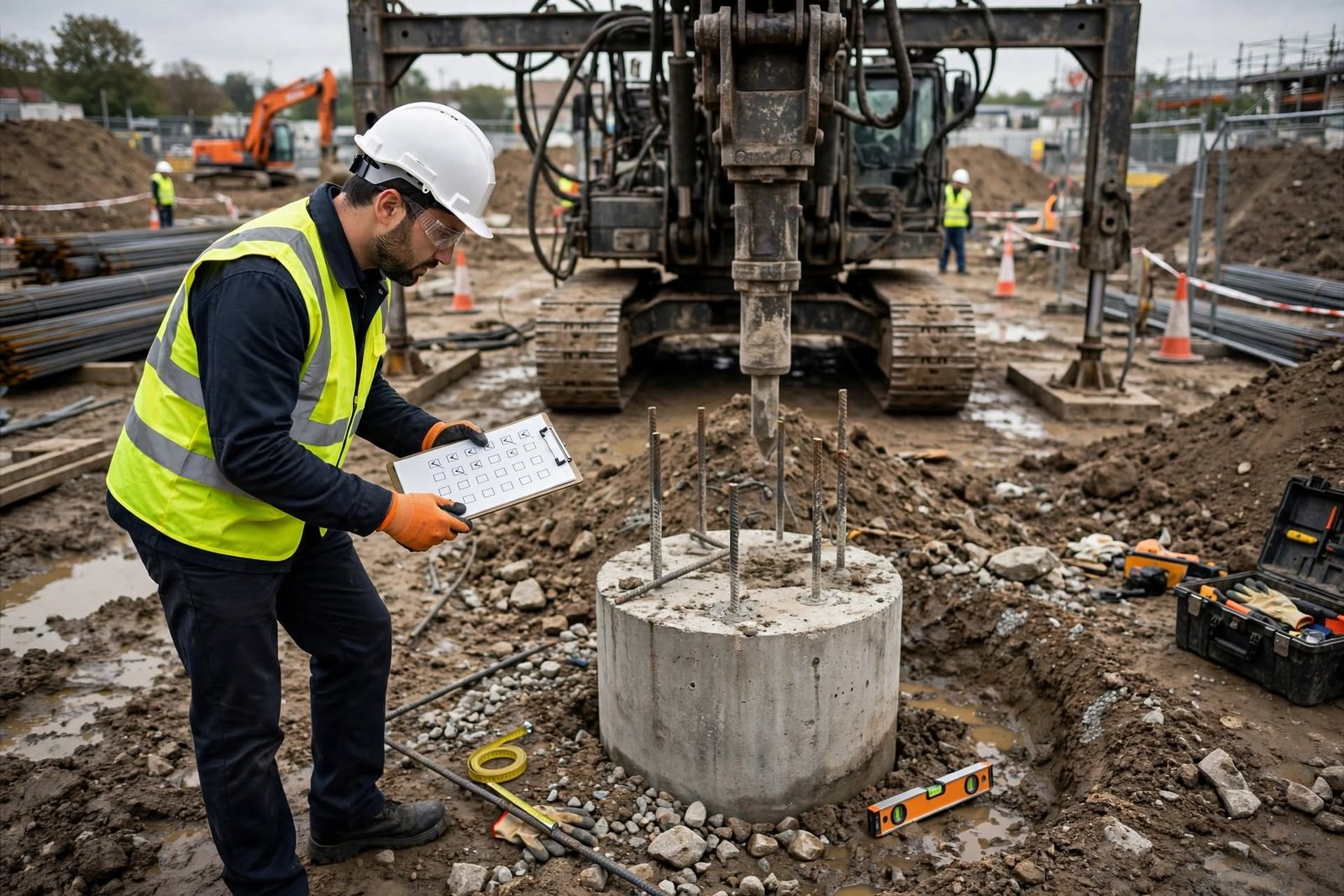
Pile Driving Inspection Checklist: 9 Steps to Pass Every Time

Table of Contents
- 1. Introduction
- 2. Prepare the Paperwork Before Anything Else
- 3. Verify Pile Alignment and Position
- 4. Confirm Blow Count and Set Records
- 5. Inspect the Piles Themselves
- 6. Check Equipment Condition
- 7. Review Safety Compliance
- 8. Verify Documentation Is Complete
- 9. Prepare the Site for Inspection
- 10. Walk the Inspector Through the Work
- 11. Wrapping It Up
- 12. Our Business Partners
1. Introduction
Every Pile Driving Inspection Checklist exists for one reason: to catch problems before they become disasters. An inspector shows up on site, walks through the work, and either signs off or shuts it down. What happens in those few hours determines whether the job keeps moving or stalls.
Most crews dread inspections. They see them as interruptions. But the crews that pass every time treat inspections differently. They prepare. They document. They know exactly what the inspector looks for on a Pile Driving Inspection Checklist before the inspector arrives.
This Pile Driving Inspection Checklist walks through nine steps that lead to a clean sign-off. Each step comes from real job sites and real inspections. Follow them and the process becomes routine instead of stressful.
2. Prepare the Paperwork Before Anything Else
Inspectors start with paperwork. Before they look at a single pile, they want to see records as outlined in a proper Pile Driving Inspection Checklist. Driving logs. Blow counts. Set measurements. Equipment certifications. If the paperwork is missing or incomplete, the inspection stalls before it starts.
Driving records for every pile. Blow counts recorded at regular intervals. Set measurements taken near the end of driving. Equipment inspection logs. Operator certifications where required.
The records need to be complete and organized for any Pile Driving Inspection Checklist. A stack of loose papers with scribbled numbers does not inspire confidence. A clean logbook with consistent entries does.
Set up a record-keeping system before the job starts. Every pile gets a record. Every blow count gets logged. Every set measurement gets recorded. Date, time, pile number, depth, blow count, set. All of it. This is a core part of the Pile Driving Inspection Checklist.
Keep records in one place. A binder works. A digital file works. What matters is that everything is together and easy to find.
Review records before the inspection. Look for gaps or inconsistencies. Fix them before the inspector finds them. A prepared Pile Driving Inspection Checklist catches these errors.
3. Verify Pile Alignment and Position
Inspectors check pile alignment carefully. A crooked pile fails inspection. A pile in the wrong location fails inspection. Getting this right starts before driving begins, another key point of the Pile Driving Inspection Checklist.

Pile location within tolerance. Pile plumb within tolerance. No visible drift or bending. Alignment consistent with the approved drawings.
Tolerances vary by project. Some jobs allow a few inches of drift. Others require near-perfect alignment. Know the tolerances before starting work as stated in the Pile Driving Inspection Checklist.
Mark pile locations clearly before driving. Double-check measurements against the drawings. A misplaced pile cannot be fixed later.
Check lead alignment before every pile. Use laser levels or digital inclinometers. Realign if anything looks off.
Monitor alignment during driving. If the pile starts to drift, stop and correct the problem. Small drift becomes big drift if ignored.
4. Confirm Blow Count and Set Records
Blow count and set are the two most important measurements in pile driving. They prove the pile reached bearing capacity. Inspectors check these numbers carefully against the Pile Driving Inspection Checklist.
Blow counts recorded at regular intervals throughout driving. Set measurements taken near the end. Blow count and set within the project specifications. No gaps in the records.
The specifications define what “passing” looks like on a Pile Driving Inspection Checklist. Some jobs require a minimum blow count per foot. Others require a maximum set per blow. Know the specifications before starting.
Record blow counts every foot. Do not skip intervals. Do not estimate. Measure and record.
Measure set accurately. Use a tape measure or measuring rod. Do not guess. The set measurement proves the pile reached bearing.
Compare your records to the specifications. If something does not match, investigate before the inspection. Fixing problems early is easier than explaining them later.
5. Inspect the Piles Themselves
Inspectors look at the piles. Not just the records. The actual piles. Cracks, bends, or damage of any kind will fail inspection on the Pile Driving Inspection Checklist.
No cracks in concrete piles. No excessive bending in steel piles. No splitting in timber piles. Pile heads intact and undamaged. Piles driven to the correct depth.
Damage can happen during driving. A worn cushion cracks a pile. Too much hammer energy bends a pile. These problems show up during inspection and violate the Pile Driving Inspection Checklist.
Inspect every pile before driving. Look for defects. Do not drive a damaged pile. Send it back.
Inspect piles after driving. Look for new damage. If a pile cracked during driving, address it immediately. Do not wait for the inspection.
Replace damaged piles. Trying to hide damage does not work. Inspectors find it. Better to fix it before they arrive.
6. Check Equipment Condition
Inspectors look at the equipment. Not just the piles. The hammer. The leads. The crane. The rigging. All of it needs to be in good condition to pass the Pile Driving Inspection Checklist.
Hammer in good working order. Leads properly aligned and maintained. Cables and rigging free of damage. Safety devices in place and functional. Equipment certifications current.
Safety devices matter. Hose safety chains. Blocking devices. Sheave guards. Shutoff valves. These are not optional. Inspectors check them against the Pile Driving Inspection Checklist.
Inspect equipment daily. Look for wear and damage. Replace worn parts before they fail.
Keep maintenance records. Show that equipment has been serviced regularly. Records prove the equipment is maintained.
Test safety devices before the inspection. Make sure they work. A non-functional safety device fails inspection.
7. Review Safety Compliance
Safety is a major part of any inspection. Inspectors check that the site follows OSHA requirements and project-specific safety rules as listed in a Pile Driving Inspection Checklist.
Personal protective equipment in use. Fall zones marked and enforced. Proper blocking devices under hammers. Hose safety chains installed. Two shutoff valves on steam and air lines. Head-block sheave guards in place.
OSHA requirements are specific. The four devices in 1926.603 are always checked. Know them. Have them in place.
Review OSHA requirements before the inspection. Make sure every requirement is met on your Pile Driving Inspection Checklist.
Train the crew on safety rules. Everyone should know what is required. Everyone should follow the rules every day.
Document safety meetings and training. Records show that safety is taken seriously.
8. Verify Documentation Is Complete
Documentation goes beyond driving records. Inspectors want to see the full picture. Permits. Test results. Equipment certifications. Training records. A complete Pile Driving Inspection Checklist demands all of this.
Permits for the work. Soil test results. Equipment inspection records. Operator certifications. Load test results if applicable. Any other project-specific documentation.
Missing documentation delays inspections. The inspector cannot sign off without seeing the paperwork. Get it together before the inspection.
Create a documentation checklist. List everything the inspector will want to see. Gather it all before the inspection. Ensure it matches your Pile Driving Inspection Checklist.
Keep documents organized. A binder with tabs works. A digital folder works. What matters is that everything is easy to find.
Review documents before the inspection. Look for gaps. Fix them before the inspector arrives.
9. Prepare the Site for Inspection
The physical site matters. Inspectors walk through the work area. A messy, disorganized site raises questions. A clean, organized site inspires confidence and passes the Pile Driving Inspection Checklist easily.
Clear access to the work area. No tripping hazards. Equipment stored properly. Materials organized. Fall zones clearly marked. Safety signage in place.
A clean site is a safe site. Inspectors know this. They look for signs that safety is taken seriously on the Pile Driving Inspection Checklist.
Clean the site before the inspection. Remove debris. Organize materials. Store equipment properly.
Mark fall zones clearly. Update barriers to match the current work layout.
Post safety signage. Make sure it is visible and legible. Replace damaged signs.
10. Walk the Inspector Through the Work
The final step is the walkthrough. The inspector walks the site. The crew walks with them. Questions get asked. Answers get given. This is the moment of truth for the Pile Driving Inspection Checklist.
Confidence. Knowledge. Crew members who know their work and can explain it clearly.
Inspectors ask questions. They want to see that the crew understands the job. Fumbling answers raise doubts. Clear answers build confidence.
Know the job. Know the records. Know the specifications. Be ready to answer questions.
Walk the inspector through the work. Point out key details. Show that the crew knows what they are doing according to the Pile Driving Inspection Checklist.
Be honest. If something is not perfect, say so. Hiding problems makes things worse. Inspectors respect honesty.
11. Wrapping It Up
Passing a pile driving inspection is not about luck. It is about preparation. The crews that pass every time follow the same steps. They prepare paperwork. They verify alignment. They record blow counts and set. They inspect piles. They check equipment. They review safety. They organize documentation. They prepare the site. They walk the inspector through the work.
This Pile Driving Inspection Checklist covers all nine steps. Follow them and the inspection becomes routine. Fail to follow them and the inspection becomes a problem. To further minimize issues on site, you can read the pile driving problems guide 7 common issues and how to fix them quickly.
Inspections are not obstacles. They are opportunities to prove the work is done right. Prepare properly using your Pile Driving Inspection Checklist and the sign-off comes easy.
Looking to round out your jobsite fleet? Beyond deep foundation work, many crews also need lifting and access equipment on the same site.
Explore the powerful TYPHON Terror X2 MAX Canopy Mini Excavator Powerful 2.5-Ton Compact Machine with Yanmar Engine for safe, efficient operations alongside your foundation crew.
12. Our Business Partners
For more details on heavy machinery and to see our business partners at work, check out the video below: