
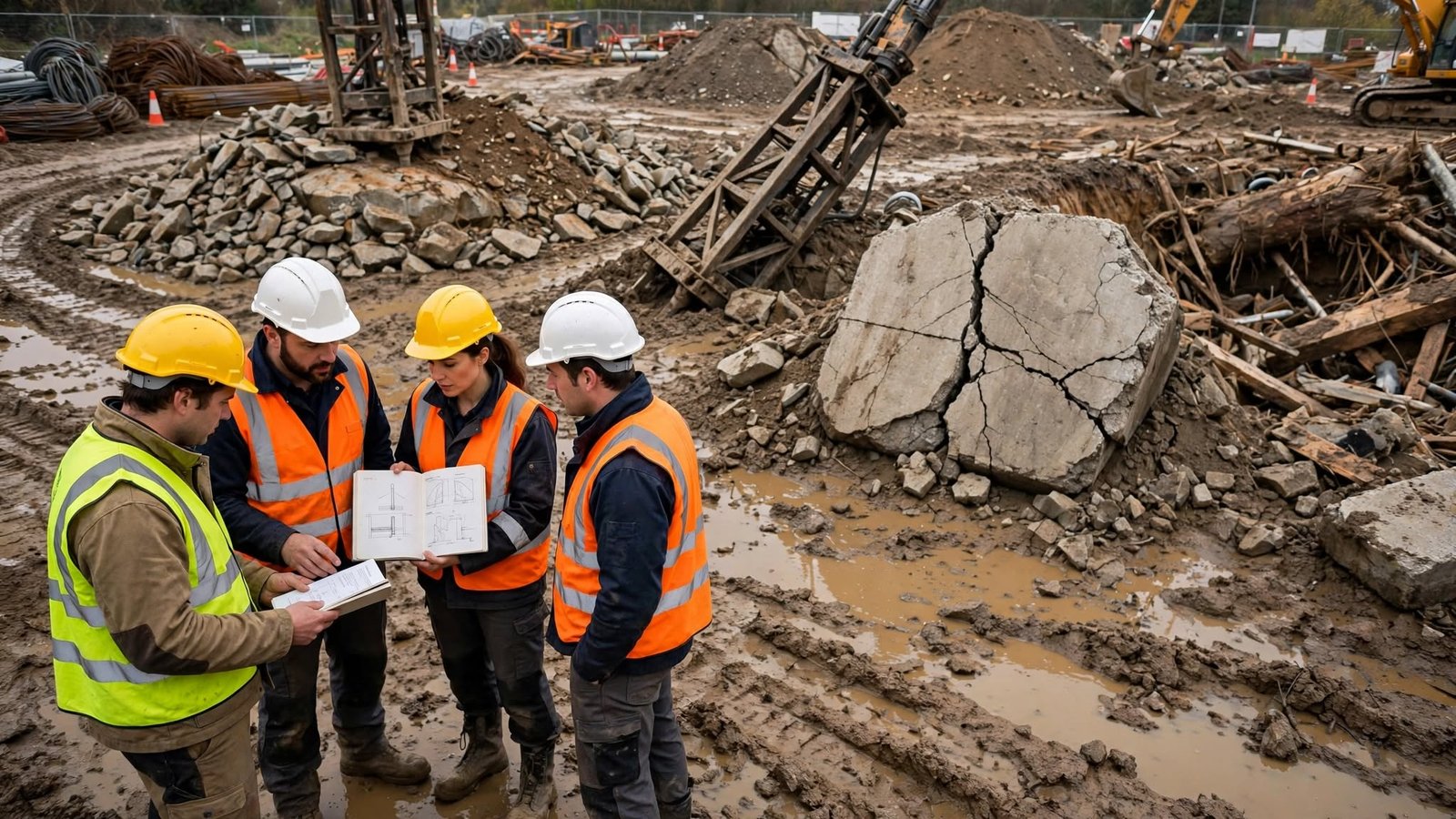
Pile Driving Problems Guide: 7 Common Issues and How to Fix Them

Table of Contents
Every Pile Driving Problems Guide starts with the same truth: things will go wrong. No matter how much planning goes into a job, something unexpected always happens.
The soil is different than the test holes showed. The equipment acts up. The piles do not go in straight. The blow count does not make sense. These issues are not rare. They happen on almost every job, which is why a solid Pile Driving Problems Guide is necessary.
The difference between a successful project and a disaster is how those problems get handled. Some crews panic when things go wrong. Others stay calm and work through the issue using a reliable Pile Driving Problems Guide. The second group finishes the job on time and on budget.
This Pile Driving Problems Guide covers seven common issues that show up on almost every job. Each one is explained with what causes it and how to fix it. Some fixes are quick. Others take time. But all of them work.
2. Refusal Before Reaching Target Depth
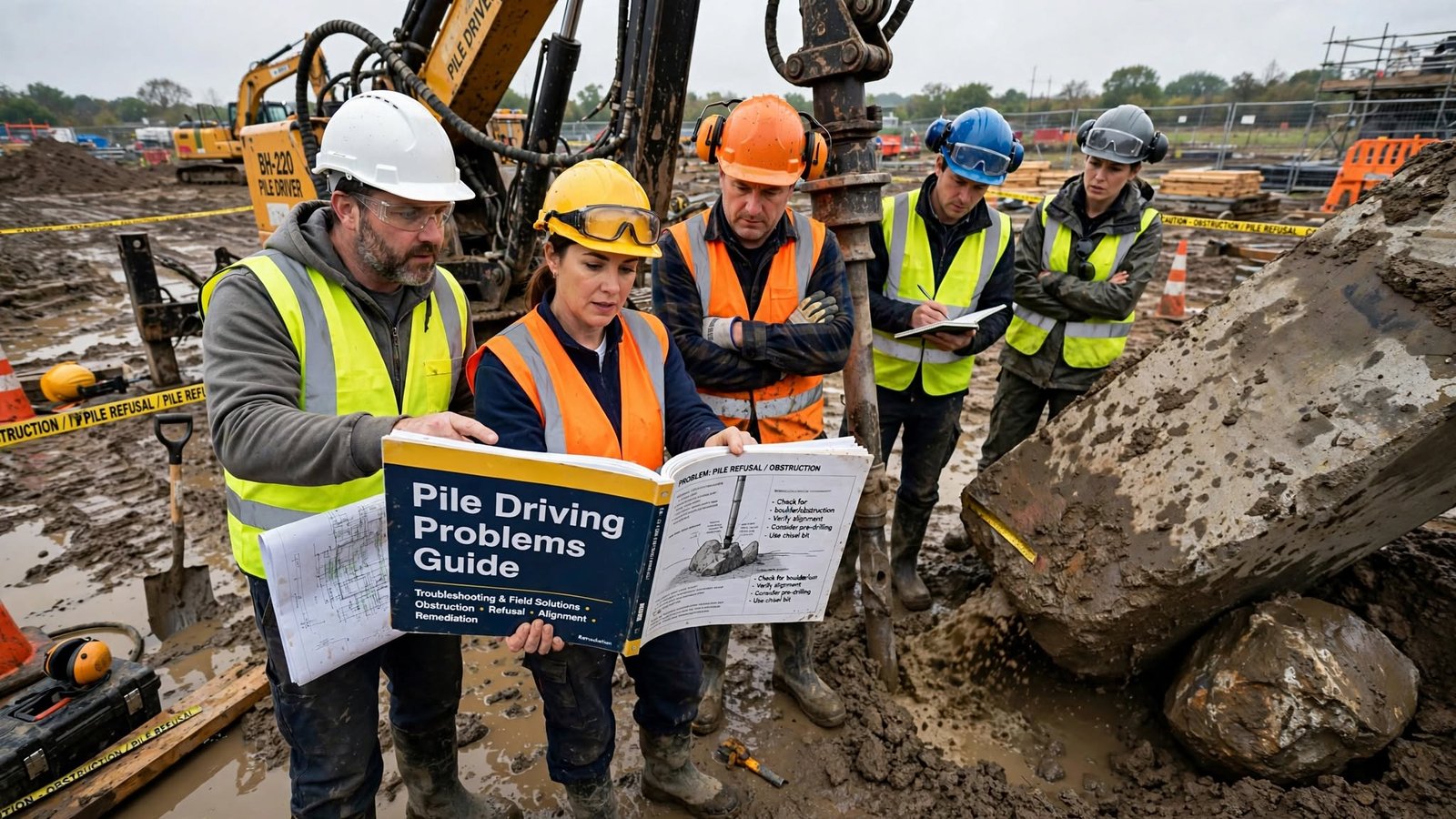
Refusal is the most frustrating problem on any pile driving job. The pile stops moving before it reaches the required depth. The hammer keeps hitting but the pile does not go down. This Pile Driving Problems Guide addresses it first.
Refusal happens when the pile hits something it cannot penetrate. Could be a boulder. Could be hard rock. Could be dense soil that the hammer cannot push through.
The operator keeps pounding hoping something will change. Nothing changes except the pile starts to crack. Then the problem gets even worse.
What Causes Refusal
Hard layers underground are the most common cause. The pile hits a layer that is too dense for the hammer energy. The blow count shoots up suddenly. The set drops to almost nothing.
Sometimes refusal happens because the hammer is underpowered for the soil conditions. The hammer does not have enough energy to push through what is down there. An accurate Pile Driving Problems Guide warns about underpowered hammers.
Other times refusal happens because the pile hits an obstruction. A buried boulder. An old foundation. Something that should not be there.
How to Fix It
Stop pounding immediately. Continuing to hit a pile that has refused will crack the pile or damage the hammer. Neither option is good.
Bring in a smaller pile and try to drive it next to the one that refused. Sometimes the smaller pile can navigate around the obstruction.
Pre-drill through the problem layer. Use an auger to create a pilot hole. Then drive the pile through the pre-drilled hole as advised by this Pile Driving Problems Guide.
Switch to a different pile type. Steel piles penetrate better than concrete piles in some conditions. Changing the pile material can get past the obstruction.
If nothing works, move the pile location. Sometimes the obstruction is isolated. Moving a few feet solves the problem.
3. Pile Damage During Driving
Pile damage is expensive and time-consuming. Cracked concrete piles. Bent steel piles. Split timber piles. All of them stop the job while replacements get ordered. Resolving this is key in any Pile Driving Problems Guide.
Damage happens more often than it should. The hammer energy is set too high. The cushion is worn out. The helmet is not centered. Something is wrong and the pile pays the price.
What Causes Pile Damage
The most common cause is excessive hammer energy. The hammer hits too hard for the pile material. Concrete piles crack. Steel piles bend. Timber piles split.
Worn cushions cause damage too. The cushion is supposed to absorb shock. When it wears out, the shock transfers directly to the pile. That shock cracks the pile.
Misaligned helmets cause uneven force distribution. The blow hits one side of the pile harder than the other. That uneven force causes cracks and bends. The Pile Driving Problems Guide flags this often.
How to Fix It
Reduce hammer energy. This is the first thing to check when piles start cracking. Back off the stroke length. Lower the pressure. Hit less hard.
Check the cushion. If it is worn, replace it immediately. This is a cheap fix that prevents expensive damage.
Check the helmet alignment. Make sure it is centered on the pile head. If it is off-center, fix the alignment using tips from the Pile Driving Problems Guide.
Inspect every pile before driving. Look for hairline cracks or defects. Do not drive a pile that is already damaged.
4. Pile Drift Off Course
Pile drift is one of the most common problems on any job. The pile starts straight and then wanders off to the side. By the time it reaches depth, it is noticeably crooked.
Drift happens gradually. A little movement each blow adds up to a big shift by the end. The operator might not even notice until the pile is too far gone. A good Pile Driving Problems Guide teaches you how to catch it early.
Crooked piles are useless. They do not carry load properly. They stress the structure above. They fail inspections.
What Causes Pile Drift
Misaligned leads are the most common cause. A tiny angle at the top becomes a big shift at the bottom. The leads need to be perfectly plumb.
Off-center blows cause drift too. The helmet hits one side of the pile harder than the other. That uneven force pushes the pile sideways.
Hard layers underground can deflect the pile. The pile hits a boulder or dense layer and slides off to the side. The soil pushes the pile off course. Knowing this is a big part of the Pile Driving Problems Guide.
How to Fix It
Check lead alignment frequently. Use laser levels or digital inclinometers. Realign before every pile if necessary.
Check helmet alignment. Make sure it is centered on the pile head. Replace worn helmets that do not fit properly.
Pre-drill pilot holes through hard layers. The pilot hole guides the pile straight through the problem layer.
Use stronger piles that resist bending. Steel piles handle side forces better than concrete piles.
5. Ground Heave
Ground heave happens when driving piles in close proximity. The soil gets displaced and pushes upward. Nearby piles rise up. The ground surface bulges.
Heave is a serious problem because it affects piles that are already driven. A pile that was perfectly straight before heave might become crooked. A pile that was at target depth might rise up and lose bearing. Your Pile Driving Problems Guide explains how to handle this.
What Causes Ground Heave
Displacement piles push soil out of the way. That soil has to go somewhere. It goes up and sideways. That upward movement is heave.
Clay soils are most susceptible to heave. Clay holds water and does not drain well. The displacement pushes the water and soil upward.
Driving too many piles in a small area causes heave. The cumulative displacement adds up. Each pile adds more pressure to the surrounding soil.
How to Fix It
Drive piles in sequence. Start in the center and work outward. This gives the soil somewhere to go as advised in the Pile Driving Problems Guide.
Pre-drill holes to reduce displacement. A pre-drilled hole removes soil instead of displacing it.
Use smaller piles. Less displacement means less heave.
Check previously driven piles frequently. If heave is detected, re-drive those piles to the proper depth.
6. Erratic Blow Counts
Erratic blow counts are confusing and frustrating. One foot takes ten blows. The next foot takes thirty. Then it drops back to twelve. No rhythm. No logic.
Erratic blow counts tell the operator something is wrong underground. The soil is inconsistent. There are boulders. There are soft pockets. Something is causing the irregularity according to the Pile Driving Problems Guide.
What Causes Erratic Blow Counts
Mixed soil conditions are the most common cause. The pile moves through different layers. Soft layers drive fast. Hard layers drive slow.
Hidden obstructions cause erratic blow counts. A boulder deflects the pile. The blow count jumps up suddenly.
Equipment problems cause erratic blow counts too. The hammer misfires. The cushion is worn. The operator is not keeping consistent stroke.
How to Fix It
Stop and investigate. If the blow count is erratic, something is wrong. Keep pounding without knowing what is down there risks damaging the pile. The Pile Driving Problems Guide warns against blind pounding.
Drill test holes near the problem spot. Get a core sample. Find out what is causing the erratic behavior.
Check the hammer. Make sure it is operating properly. Adjust the stroke if needed.
Recheck the pile alignment. If the pile is drifting, it might be hitting a hard layer at an angle.
7. Equipment Breakdowns
Equipment breakdowns are the most predictable problem on any job. Something will break. It always does.
A broken hammer. A burst hydraulic line. A frayed winch cable. Any of these stops the job. The crew stands around while repairs get made. This is a common section in every Pile Driving Problems Guide.
What Causes Equipment Breakdowns
Lack of maintenance is the leading cause. Cushions wear out and are not replaced. Cables fray and are not replaced. Hydraulic lines leak and are not repaired.
Operating equipment beyond its capacity causes breakdowns. A hammer that is too small for the job gets pushed too hard. It breaks.
Operator error causes breakdowns too. Running equipment the wrong way. Overlooking warning signs. Not following proper procedures.
How to Fix It
Perform preventive maintenance. Inspect equipment regularly. Replace worn parts before they fail.
Keep spare parts on site. Cushions, hoses, cables, filters. Having spares means quick repairs. The Pile Driving Problems Guide suggests always being prepared.
Train operators properly. Show them how to use the equipment correctly. Show them what to watch for.
Keep a maintenance log. Track when maintenance was done and what was replaced. This helps predict future needs.
8. Environmental Issues
Environmental issues are becoming more common and more restrictive. Noise limits. Vibration limits. Permit requirements. All of them affect pile driving operations.
Regulators are paying more attention to pile driving. Many cities now have strict rules about when and how pile driving can be done. Make sure your Pile Driving Problems Guide is up to date with these rules.
What Causes Environmental Issues
Noise is the biggest concern. Pile driving is loud. Neighbors complain. Regulators get involved.
Vibration is another concern. Impact driving shakes the ground. Old buildings crack. Sensitive equipment gets damaged.
Permitting requirements slow things down. Getting permits takes time. The job cannot start until permits are in hand.
How to Fix It
Research local regulations before the job starts. Call the city. Talk to the building department. Know what is required.
Use quieter equipment. Vibratory hammers are quieter than impact hammers. Rotary drilling is even quieter.
Monitor noise and vibration levels. Keep records. Show regulators that the job is within limits. To learn more about navigating tough terrain, see the pile driving soil guide 6 things you must know to prevent issues.
Schedule work during allowed hours. Some areas allow pounding only during specific times. Plan the job around those restrictions.
9. Wrapping It Up
Problems on a pile driving job are not a question of if. They are a question of when. Every job has issues. Every job needs solutions.
Refusal before reaching target depth requires stopping, investigating, and adjusting the approach. Pile damage requires checking hammer energy, cushions, and alignment. Pile drift requires checking leads and helmets. Ground heave requires proper driving sequence. Erratic blow counts require investigation. Equipment breakdowns require maintenance. Environmental issues require planning.
The key is not avoiding problems. The key is handling them correctly when they appear. A crew that stays calm and works through the issues finishes the job. A crew that panics or ignores problems makes things worse. This Pile Driving Problems Guide aims to keep your crew focused.
This Pile Driving Problems Guide covers the most common issues. Apply these fixes and the job will move forward. Problems are just obstacles to work through. Every obstacle overcome makes the crew stronger.
Looking to round out your jobsite fleet? Beyond deep foundation work, many crews also need lifting and access equipment on the same site.
Explore the powerful TYPHON Terror X2 MAX 2.7-Ton Mini Excavator Powerful Yanmar Engine Cabin with A/C & Heater Pilot Control Boom Swing for safe, efficient operations alongside your foundation crew.
10. Our Business Partners
For more details on heavy machinery and to see our business partners at work, check out the video below: