
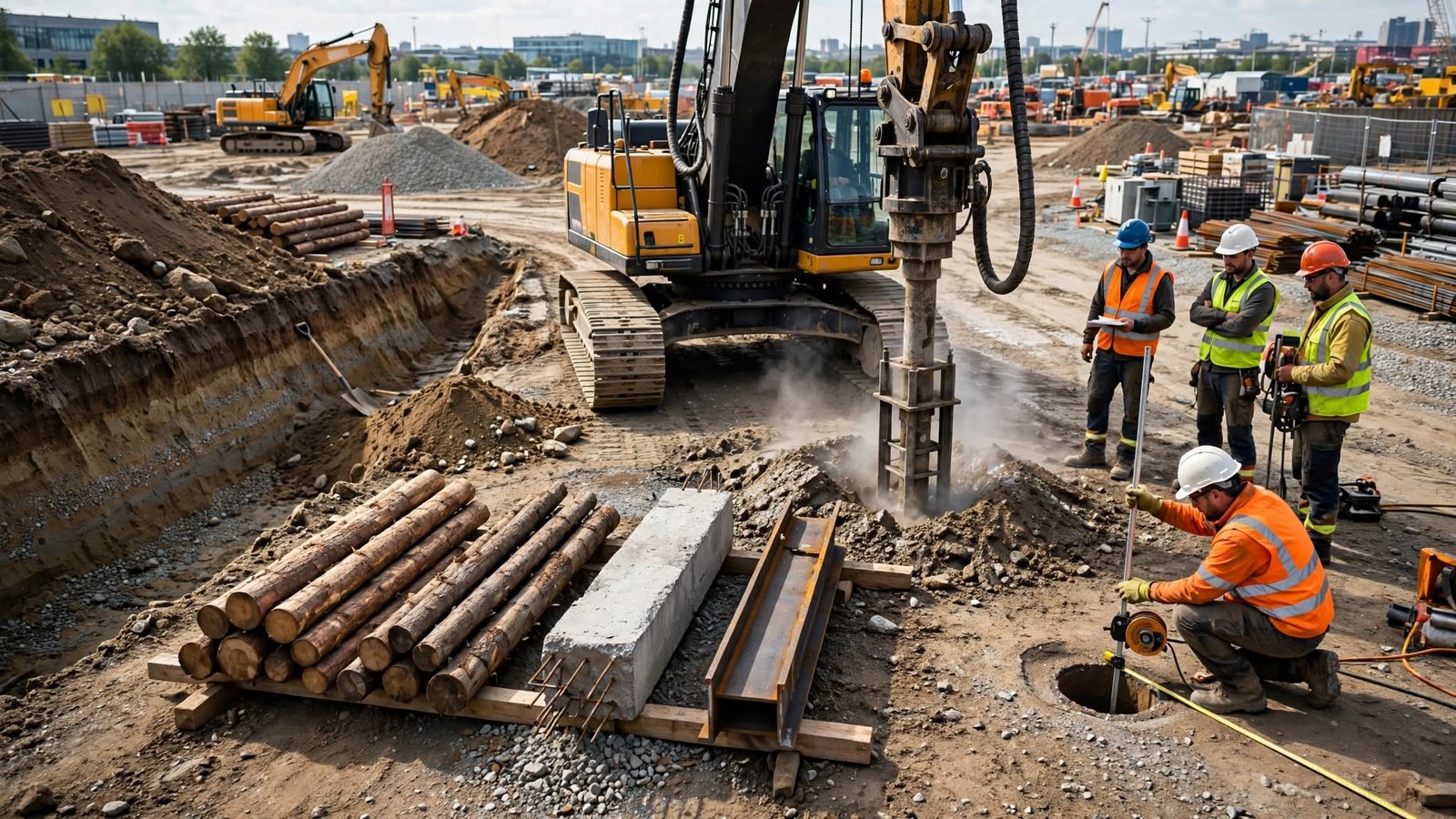
Pile Driving Cost Guide: 5 Factors That Determine Your Budget

Table of Contents
1. Introduction
Every contractor knows the feeling. A job looks good on paper. The numbers add up. The bid gets submitted. Then reality hits, and you wish you had a reliable Pile Driving Cost Guide.
Costs go higher than expected. The soil is harder than the report said. The equipment breaks down. The timeline slips. Suddenly that profitable job is losing money.
Pile driving costs can be unpredictable. But they do not have to be. Understanding what drives those costs helps contractors bid accurately and manage projects effectively, which is the core of this Pile Driving Cost Guide.
This Pile Driving Cost Guide covers five factors that determine the budget for any pile driving job. Some are obvious. Others are less visible. All of them affect the bottom line.
Getting the budget right makes the difference between winning a job and losing money on it. Contractors who use a good Pile Driving Cost Guide bid more competitively. They also finish jobs with their margins intact.
2. Soil Conditions
Soil is the biggest factor in pile driving costs. It determines the equipment needed, the time required, and the depth required.
Easy soil means fast driving. Sand and gravel drive quickly. Vibratory hammers work well. The piles go in with little resistance. The job moves fast. Costs stay low.
Hard soil means slow driving. Clay and rock require more energy. Impact hammers need more blows. The job takes longer. Costs go up, as any accurate Pile Driving Cost Guide will tell you.
Mixed soil means unpredictable costs. One spot drives easily. The next spot takes forever. This variability makes bidding tricky. Contractors need to plan for the worst using their Pile Driving Cost Guide.
Soil testing is essential for accurate budgeting. Test holes reveal what is down there. The results tell contractors what to expect. Without testing, the budget is just a guess. Contractors who skip testing often regret it.
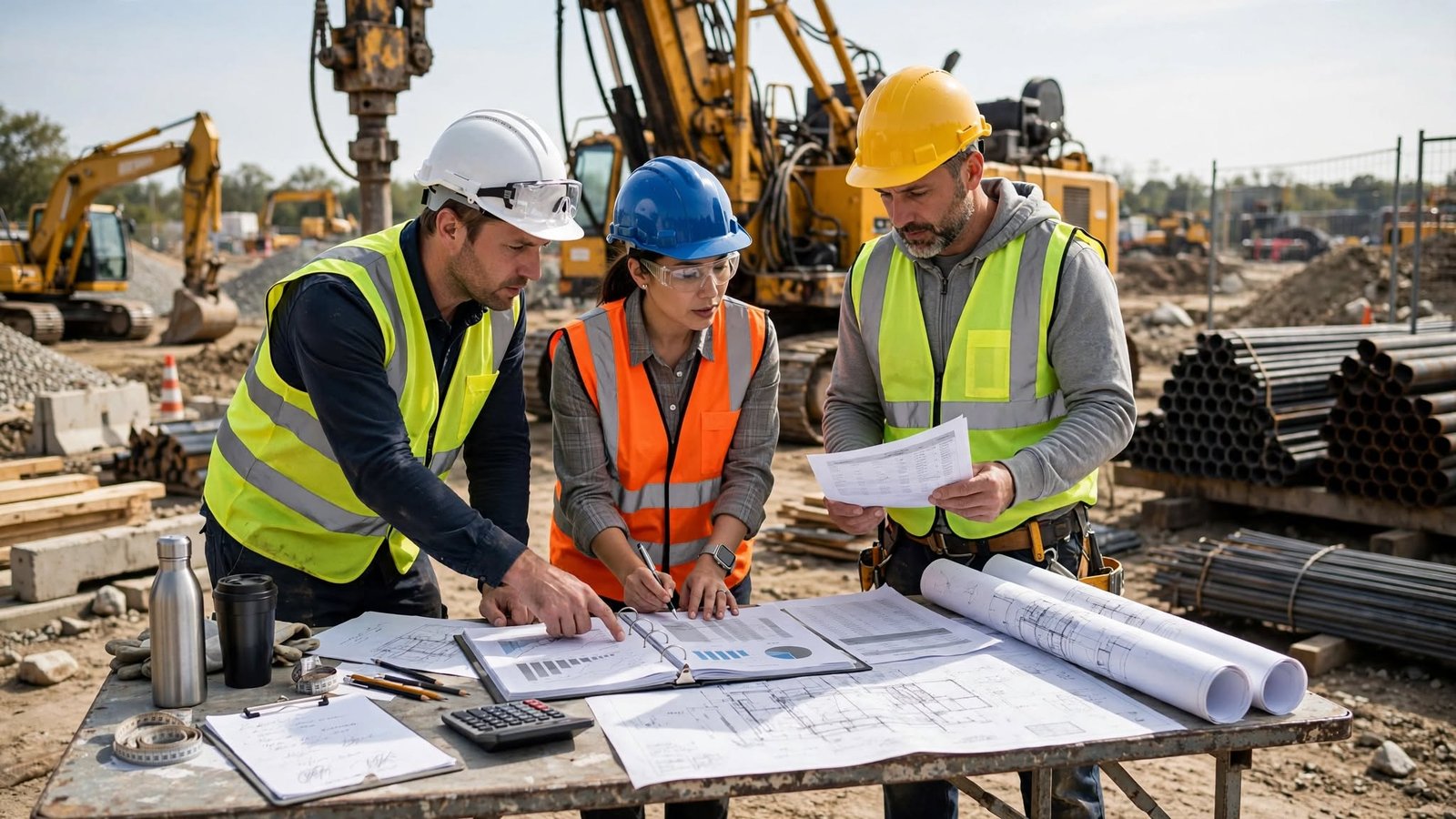
Different soils require different equipment. Changing equipment mid-job costs money. Proper testing prevents expensive changes. It also helps contractors bid more accurately.
Soil also affects pile depth. Soft soil requires deeper piles. Deeper piles cost more. More material. More time. More labor. The depth adds up quickly over hundreds of piles, a common point in any Pile Driving Cost Guide.
The water table matters too. Driving below the water table changes everything. Friction decreases. Blow counts change. Bearing capacity becomes harder to verify. Contractors need to account for groundwater conditions.
Seasonal changes affect soil costs. Wet seasons bring higher water tables. Dry seasons lower them. Contractors need to plan for the conditions during the job. Winter jobs cost more than summer jobs in some regions.
Rock layers present special challenges. Driving through rock requires specialized equipment. That equipment costs more to rent and operate. Pre-drilling might be necessary. That adds time and expense.
Boulders and obstructions increase costs. Hitting a boulder stops the job. The crew needs to figure out what to do. Sometimes they move the pile location. Sometimes they drill through. Both options cost money.
Soil contamination adds another layer of complexity. Contaminated soil requires special handling. Disposal costs go up. Safety measures add expense. Environmental regulations add paperwork and delays. Keep this in mind when making your Pile Driving Cost Guide.
3. Equipment Selection
Equipment choice directly impacts cost. The right equipment saves money. The wrong equipment wastes it. The Pile Driving Cost Guide highlights this clearly.
Renting equipment is common on pile driving jobs. Daily or monthly rates vary widely. Choosing the right machine keeps rental costs under control.
Impact hammers cost less to rent than vibratory hammers. But they take longer in some soil. The total cost might be higher. Contractors need to look at the whole picture, not just the daily rate.
Vibratory hammers cost more per day. But they drive faster in sand. The total cost might be lower. Faster driving means fewer days of rental. That saves money despite the higher daily rate. This is exactly what a Pile Driving Cost Guide teaches.
Large hammers cost more than small hammers. But a small hammer might not reach bearing. The job fails. That costs more than renting the right hammer. Contractors need to size equipment properly.
The base machine adds to equipment costs. Cranes cost money. Rigs cost money. The choice between them affects the budget. Crawler cranes cost more than excavator-mounted rigs. But they handle more weight.
Maintenance costs are part of equipment costs. Newer equipment costs more but breaks down less. Older equipment is cheaper but risks downtime. Downtime costs more than higher rental rates in any Pile Driving Cost Guide assessment.
Fuel consumption varies by equipment. Diesel hammers need fuel. Hydraulic hammers need fuel for the power unit. These costs add up over long jobs. Fuel-efficient equipment saves money.
Transportation costs for equipment matter too. Moving equipment to the site costs money. Remote sites cost more to reach. Local suppliers save on transportation.
Equipment availability affects cost. Peak construction season means higher demand. Equipment costs more when everyone needs it. Off-season jobs might get better rates.
Backup equipment adds to costs. Having a spare hammer on site costs money. But not having one when the primary fails costs more. The decision depends on the job size and timeline, an important lesson from the Pile Driving Cost Guide.
Specialized equipment for difficult jobs costs more. Underwater hammers. High-capacity rigs. Custom attachments. These all add to the budget.
4. Labor Costs
Labor is a major cost on any pile driving job. Operators, ground crew, and supervisors all need payment. Managing this is a big part of the Pile Driving Cost Guide.
Experienced operators cost more per hour. But they work faster and make fewer mistakes. The total labor cost might be lower with experienced people. They get more done in less time.
Inexperienced operators cost less per hour. But they drive slower and make mistakes. The total labor cost might be higher. Mistakes cause delays and rework.
Crew size affects labor costs. More people means more labor hours. But more people might also mean faster progress. The optimal crew size depends on the job.
Overtime costs more than regular time. But sometimes overtime is necessary. Planning the schedule to minimize overtime saves money. Weekend work costs even more, a classic point in the Pile Driving Cost Guide.
Training costs are part of labor costs. Untrained workers make mistakes. Mistakes cost time and money. Investing in training pays off in productivity.
Travel and accommodation add to labor costs for out-of-town jobs. Local workers cost less to bring on site. Hiring locally saves money when possible.
Labor rates vary by location. Urban areas cost more than rural areas. Contractors need to know local rates for accurate bidding. Union rates differ from non-union rates.
Benefits add to labor costs. Health insurance. Retirement contributions. Paid time off. These costs add significantly to the hourly rate.
Safety training costs money. OSHA requirements. Site-specific training. Equipment certification. All necessary but they add to the budget in your Pile Driving Cost Guide.
Supervision costs add to labor. A foreman or supervisor costs more than a regular worker. But good supervision prevents mistakes. The investment pays off.
Crew morale affects productivity. Happy workers work faster. Unhappy workers drag their feet. Treating workers well is not just ethical. It is good business.
5. Pile Materials
The piles themselves are a major cost. Material choice affects the budget significantly in any Pile Driving Cost Guide.
Steel piles cost more than concrete piles. But steel piles handle higher energy. They crack less. They might save money in the long run. Fewer replacements mean lower total cost.
Concrete piles cost less than steel piles. But concrete piles crack under high energy. They take longer to install. The total cost might be higher. Repair costs add up.
Timber piles cost the least. But timber piles have limited applications. They only work in certain soil types. They have shorter service lives. Replacement costs add up over time.
Pile size affects cost. Larger piles cost more. But larger piles might mean fewer piles. The total cost depends on the design. Engineering decisions affect material costs.
Transportation adds to pile costs. Long distances mean higher shipping costs. Local suppliers save money. Planning ahead can reduce freight charges. Keep shipping in mind when following your Pile Driving Cost Guide.
Quantity discounts apply to large jobs. Buying more piles reduces the per-unit cost. The budget needs to account for this. Ordering all piles at once saves money.
Delivery schedules affect costs. Rush orders cost more. Planning ahead saves money. Last-minute orders add premium charges.
Quality matters. Cheap piles might have defects. Defective piles fail during driving. Replacement costs add to the budget. Quality piles cost more upfront but save money overall.
Corrosion protection adds to steel pile costs. Coatings. Cathodic protection. Thicker material. These all cost money but extend service life.
Splicing piles adds cost. When piles need to be longer than standard lengths, they get spliced together. Welding costs money. Inspection costs money.
Cutting piles to final grade costs money. Extra length gets cut off. The cutting process takes time and equipment. Accurate driving reduces cutting waste.
6. Project Timeline
Time is money on any construction job. The timeline directly affects costs in the Pile Driving Cost Guide.
Longer jobs cost more. Equipment rental continues. Labor costs continue. Overhead expenses continue. Every extra day adds to the budget.
Faster jobs cost less per day. But faster jobs might need more equipment or more crew. The total cost might be the same. Contractors need to find the optimal speed.
Weather delays add to costs. Rain stops work. Extreme heat slows work. The budget needs to account for weather. Building buffer time into the schedule helps.
Equipment breakdowns add to costs. Downtime means no progress. Costs continue while no piles get driven. Preventive maintenance reduces breakdowns. This is a core focus of a good Pile Driving Cost Guide.
Permitting delays add to costs. The job cannot start without permits. The timeline slips. Costs increase. Get permits early to avoid delays.
Inspection delays add to costs. The inspector needs to verify the work. If the inspector is unavailable, the job stops. Plan for inspections in the schedule.
The construction schedule affects pile driving. Other trades need the foundation ready. Delays in pile driving delay the whole project. This creates pressure and costs.
Phasing affects timeline. Doing piles in phases might stretch the timeline. But it might allow other work to proceed. The trade-offs need careful evaluation.
Mobilization and demobilization costs relate to timeline. Bringing equipment to site costs money. Sending it away costs money. One mobilization is cheaper than multiple ones.
Seasonal considerations affect timeline. Winter conditions slow work. Summer heat slows work. Spring and fall often provide the best conditions.
Overnight work might be necessary in urban areas. Night shifts cost more. But they might be required by noise regulations. The budget needs to account for this in the Pile Driving Cost Guide.
7. Wrapping It Up
Understanding pile driving costs helps contractors bid accurately and manage projects effectively. A solid Pile Driving Cost Guide makes all the difference.
Soil conditions determine the equipment needed and the time required. Testing the soil before bidding prevents surprises.
Equipment selection affects rental costs and productivity. Choosing the right machine saves money over the whole job.
Labor costs depend on crew size, experience, and overtime. Investing in experienced workers pays off in productivity.
Pile materials vary in cost and performance. The right choice depends on the job requirements and soil conditions.
Project timeline affects all other costs. Delays increase expenses. Planning ahead prevents costly delays. For full execution, learn from the ultimate pile project guide 10 steps from start to finish.
These five factors interact. Soil affects equipment choice. Equipment affects labor productivity. Labor productivity affects timeline. Timeline affects total cost.
Accurate budgeting means understanding these relationships. No factor stands alone. The total cost comes from the combination found in a Pile Driving Cost Guide.
Contractors who understand these factors bid more accurately. They manage projects more effectively. They make better profits.
Take the time to analyze each factor. The job will go smoother. The bottom line will look better.
Looking to round out your jobsite fleet? Beyond deep foundation work, many crews also need lifting and access equipment on the same site.
Explore the powerful new 2025 TYPHON Vigor 3.0 Blue Electric Forklift 3 Ton Lifter Lift Truck for safe, efficient operations alongside your foundation crew.
8. Our Business Partners
For more details on heavy machinery and to see our business partners at work, check out the video below: