
Pile Driving Maintenance Guide: 7 Habits to Maximize Uptime

Table of Contents
1. Introduction
Equipment breaks down. That is a fact of life on any job site. But how often it breaks down and how long it stays broken is something that can be controlled with a solid Pile Driving Maintenance Guide.
Too many crews wait until something fails before they think about maintenance. The hammer starts misfiring. The winch cable frays. The hydraulic line bursts. Then the job stops while repairs get made.
That approach costs time and money. A single breakdown can shut down a pile driving job for hours or even days. The labor still gets paid. The equipment still gets rented. But no piles get driven. A proper Pile Driving Maintenance Guide prevents this.
The alternative is preventive maintenance. Small habits performed regularly that keep equipment running smoothly. This approach does not guarantee zero breakdowns. But it reduces them significantly.
This Pile Driving Maintenance Guide covers seven maintenance habits that keep pile driving equipment running. Some are daily routines. Others are weekly checks. All of them are simple and effective.
2. Inspect Cables Before Every Use
Cables are the lifelines of any pile driving setup. The winch cables lift the hammer. The rigging cables position the piles. A broken cable can drop a heavy load and injure someone.
Cable inspection takes five minutes. Run a rag along the cable length. Feel for broken wires. Look for flat spots, kinks, or rust. Check the connections at both ends. This is a basic rule in any Pile Driving Maintenance Guide.
Worn cables need replacement. Do not wait until they break. A new cable costs a few hundred dollars. A broken cable can cause thousands in damage and injury.
Keep spare cables on site. When one looks questionable, swap it out. The old one can serve as a backup if it is still serviceable.
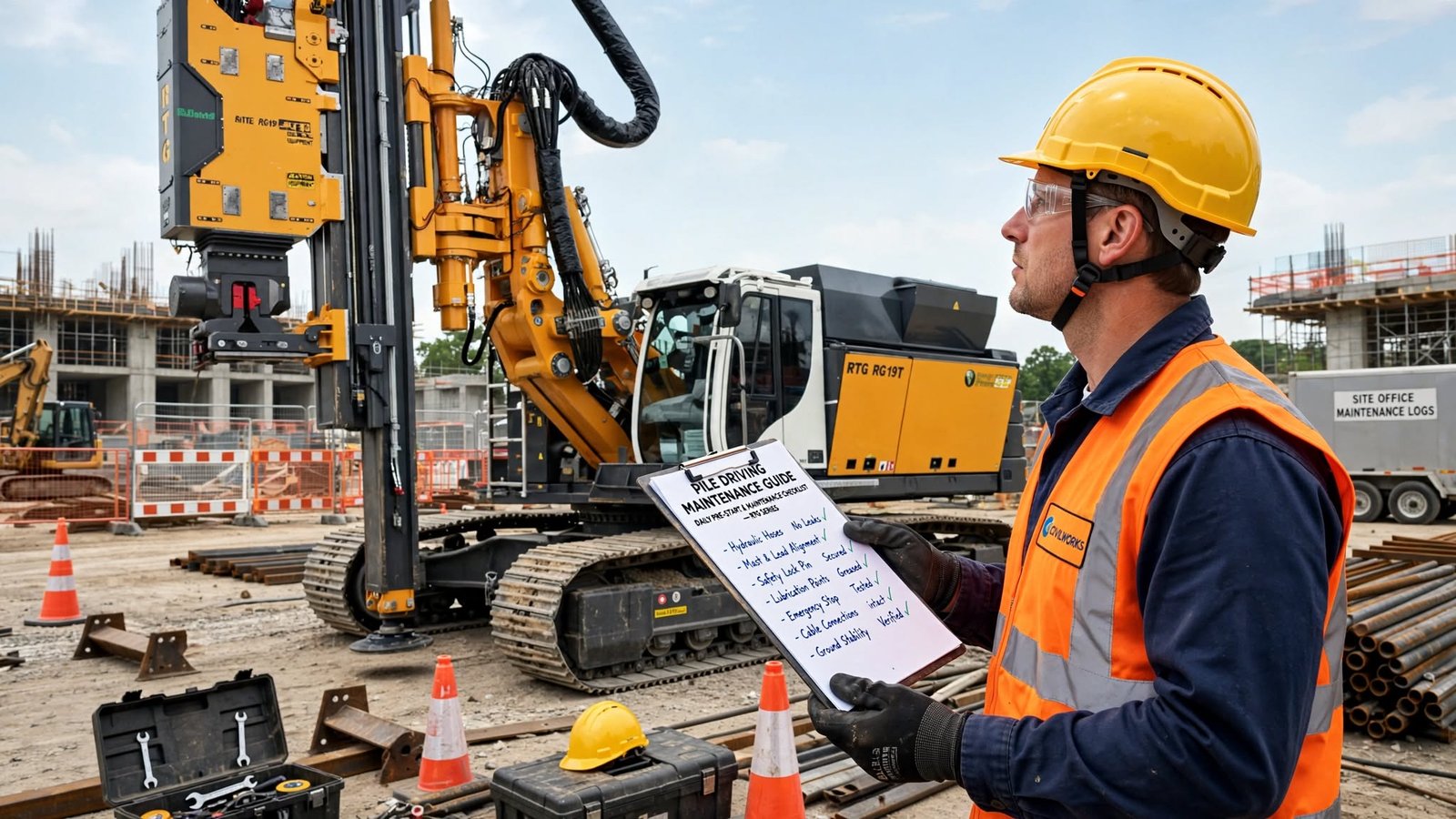
Operators should check cables every morning before starting work. The ground crew should also check cables before each lift. That extra minute of inspection saves hours of repair later, a key point of the Pile Driving Maintenance Guide.
What to look for specifically? Broken wires sticking out like tiny needles. Flat spots where the cable has rubbed against something. Kinks that weaken the cable structure. Rust that eats away at the metal. Any of these signs mean the cable needs replacing.
Do not try to splice or repair damaged cables. That is a shortcut to disaster. Replace them properly. Use the right cable for the job. Different applications need different cable constructions.
When replacing cables, keep the old one for a few days. Someone else might need to check something on it. After that, dispose of it properly. Do not leave damaged cable lying around the site.
3. Check Hydraulic Lines Daily
Hydraulic lines carry high-pressure fluid to the hammer and other components. A burst line sprays fluid everywhere and stops the job. A good Pile Driving Maintenance Guide always emphasizes this check.
Look for leaks around fittings. Check for cracks or bulges in the lines. Feel for soft spots that indicate internal damage. Pay attention to any pooling of fluid under the equipment.
Tighten loose fittings. Replace damaged lines before they fail. Keep a supply of replacement hoses and fittings on the job.
Hydraulic fluid levels need monitoring too. Low fluid means a leak somewhere. Top it off and find the source. Do not just keep adding fluid without investigating. This is vital in the Pile Driving Maintenance Guide.
Hydraulic systems run under extreme pressure. A small pinhole leak can spray fluid with enough force to penetrate skin. That is a serious injury. Never check for leaks with bare hands. Use a piece of cardboard or wood to feel for escaping fluid.
The fluid itself needs attention too. Clean fluid keeps the system running smoothly. Dirty fluid damages pumps and valves. Change filters according to the schedule. Test the fluid quality regularly.
Overheating is another sign of hydraulic problems. If the system runs hot, something is wrong. Maybe the cooler is blocked. Maybe the fluid level is low. Maybe the pump is struggling. Figure it out before the system fails completely.
4. Replace Cushions at the Right Time
Cushions absorb shock between the hammer ram and the pile. Without cushions, the impact damages the hammer and cracks the pile. The Pile Driving Maintenance Guide stresses their importance.
Cushions wear down with use. The material compresses and hardens. A worn cushion transmits more shock than it absorbs. That shock goes into the pile and the hammer.
Signs of a worn cushion include visible compression, cracking, or burning. The hammer may feel different. The blow may sound different.
Replace cushions before they completely fail. A set of cushions costs much less than a cracked pile or damaged hammer. Keep spare cushions on site for quick changes.
Some contractors try to stretch cushion life. They flip them over. They rotate them. They keep using them long past their useful life. That is a false economy. The damage caused by worn cushions costs way more than the price of new ones, as taught in this Pile Driving Maintenance Guide.
Different pile types need different cushion materials. Concrete piles need softer cushions that absorb more shock. Steel piles can handle harder cushions. Using the wrong cushion material wears them out faster.
Track cushion usage by hours of operation. A logbook helps predict when cushions need changing. Change them before they fail, not after. That keeps the job running smoothly.
5. Lubricate Moving Parts Regularly
Pile driving equipment has many moving parts. The hammer ram slides up and down. The leads pivot and rotate. The winch turns constantly. Lubrication is a cornerstone of the Pile Driving Maintenance Guide.
Friction wears down components. Metal grinds against metal. Parts loosen and fail. Lubrication reduces friction and extends equipment life.
Follow the manufacturer’s lubrication schedule. Use the recommended grease and oil. Do not over-lubricate, which attracts dirt and causes other problems.
Pay special attention to the hammer. The ram requires proper lubrication to move freely. A sticky ram reduces blow energy and damages the hammer.
Different components need different lubricants. Grease for bearings. Oil for engines. Special compounds for certain applications. Using the wrong lubricant can cause more problems than no lubricant at all.
Apply grease until it squeezes out of the fitting. That shows the bearing is full. Wipe off excess grease so it does not attract dirt. Keep grease fittings clean so dirt does not get pushed into the bearing.
Check oil levels daily. Engines, transmissions, and hydraulic reservoirs all need monitoring. Low oil levels lead to overheating and failure. Fill them to the proper level before starting work, a key step in the Pile Driving Maintenance Guide.
6. Monitor Hammer Performance
The hammer is the most critical piece of equipment on a pile driving job. Monitoring its performance catches problems early.
Track blow energy and blow rate. A drop in energy means something is wrong. Could be low hydraulic pressure. Could be worn seals. Could be fuel issues on diesel hammers.
Listen to the hammer. Experienced operators know how the hammer should sound. A change in rhythm or tone indicates a problem. Every Pile Driving Maintenance Guide recommends this practice.
Keep a log of hammer performance. Note any changes. Patterns emerge that point to developing issues. Addressing those issues early prevents major failures.
Diesel hammers have their own monitoring needs. Check the fuel system daily. Look for leaks. Check the injectors. Make sure the starting system works properly.
Hydraulic hammers need fluid checks. Check the filter indicator. Look for contamination. Monitor temperature. Any deviation from normal means something needs attention.
The hammer is the heart of the pile driving operation. When the heart stops, the whole job stops. Taking care of it pays off in uptime and productivity.
7. Keep Equipment Clean
Dirt and debris cause problems. They clog filters. They wear down moving parts. They hide leaks and damage. A clean machine is a happy machine in the Pile Driving Maintenance Guide.
Clean equipment regularly. Blow off dust and dirt with compressed air. Wipe down hydraulic components. Clear debris from cooling fins and air intakes.
A clean machine runs cooler. It is easier to inspect. Problems get spotted faster because dirt is not hiding them.
Pressure washing is effective but use caution around electrical and hydraulic components. Cover sensitive parts before washing. Allow time for drying.
Cleaning is not just about appearances. Dirt acts as an abrasive. It wears down seals and bearings. It clogs cooling systems. It traps moisture against metal surfaces, causing rust.
Keep the cab clean too. Operators work better in a clean environment. They can see the instruments clearly. They can reach controls easily. A clean cab reduces fatigue and improves performance.
Establish a cleaning routine. Blow off the machine at the end of each day. Wash it thoroughly weekly. This simple habit pays off in equipment longevity. This is the essence of the Pile Driving Maintenance Guide.
8. Maintain Accurate Records
Good records make maintenance easier. They show what was done and when. They highlight patterns and predict future needs.
Track every maintenance action. Date, time, work performed, parts replaced. Note any issues found. Record hammer performance data.
Use these records to plan maintenance schedules. Replace components based on usage, not just calendar time. A hammer that runs ten hours a day needs more attention than one that runs five. That is common sense in the Pile Driving Maintenance Guide.
Share records with operators and mechanics. Everyone benefits from knowing the equipment history.
Records also help with troubleshooting. When a problem occurs, look back at the logs. See what changed recently. That often points to the cause.
Digital records are easier to maintain and search. But paper logs work too. Just be consistent. Record everything. Do not rely on memory.
Good records also help with budgeting. Look at maintenance costs over time. Plan for upcoming replacements. Avoid surprise expenses that blow the budget.
9. Wrapping It Up
Maintenance is not glamorous. It does not grab attention like a big hammer pounding piles. But it makes the difference between a smooth job and a constant struggle.
These seven habits are simple and effective. Inspect cables daily. Check hydraulic lines. Replace cushions when needed. Lubricate moving parts. Monitor hammer performance. Keep equipment clean. Maintain accurate records.
None of these steps take much time. The cost is minimal compared to breakdown repairs. Yet many crews skip them. They wait until something breaks. They pay the price in downtime and lost productivity. Make sure you don’t miss the pile driving soil guide 6 things you must know.
Preventive maintenance, as highlighted in this Pile Driving Maintenance Guide, keeps equipment running. It reduces downtime. It saves money. It makes the job easier.
Take care of the equipment using this Pile Driving Maintenance Guide and it takes care of the job.
Looking to round out your jobsite fleet? Beyond deep foundation work, many crews also need lifting and access equipment on the same site.
Explore the powerful new TYPHON Telescopic Wheel Loader with Kubota D1105 Engine 25 HP 1-Ton Load (USA) for safe, efficient operations alongside your foundation crew.
10. Our Business Partners
For more details on heavy machinery and to see our business partners at work, check out the video below:
One Comment