
Pile Driving Soil Guide: 6 Things You Must Know Before You Start

Table of Contents
1. Introduction
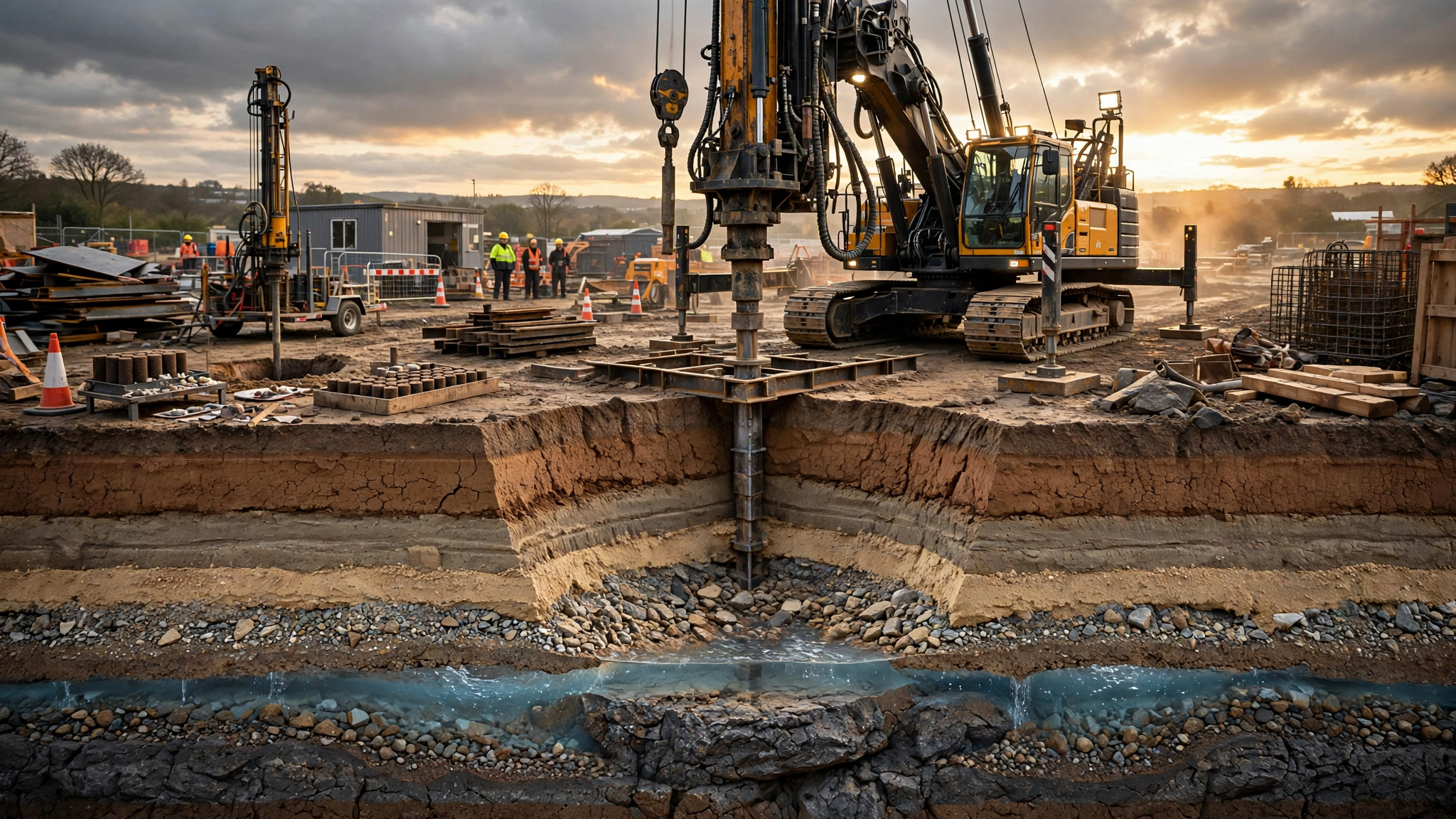
Most people think about the hammer when they think about pile driving. Big machine. Loud noise. Pounding steel into the ground. But the hammer is only half the story. The other half is what is underneath. This is why a proper Pile Driving Soil Guide is essential.
The soil decides everything on a pile job. It determines which equipment works. It tells you how deep to drive. It affects your timeline and your budget. Ignore the soil and the job will fail. Simple as that. A good Pile Driving Soil Guide keeps you on track.
This Pile Driving Soil Guide covers six things every contractor needs to know about soil before starting a pile job. Some of these points seem basic. Others are less obvious. All of them come from real job sites, not textbooks.
Read through them. Learn them. Apply them using this Pile Driving Soil Guide. The difference between a smooth job and a disaster is usually just a few decisions made early on.
2. Soil Types Behave Completely Differently
Not all dirt is the same. Anyone who has spent time on a job site knows this. But knowing it and planning for it are two different things, which is the core of any Pile Driving Soil Guide.
Sand acts one way. Clay acts another way. Gravel is different from silt. Each type responds differently to pile driving. Each type requires a different approach.
Sand and Gravel
Sand and gravel are granular soils. They drain water well. They compact under vibration. A vibratory hammer works great in these conditions. The shaking densifies the soil and the pile slides right in.
Impact hammers also work in sand. But vibratory is faster and quieter. If the job involves sheet piles in sandy ground, vibratory is usually the right call. The main challenge with sand is that it can shift. Loose sand does not hold a pile well. Driving deeper into denser sand solves that problem, as noted in this Pile Driving Soil Guide.
Clay and Silt
Clay and silt are cohesive soils. They hold water. They do not drain well. Vibratory hammers struggle in clay because the soil does not liquefy under vibration. The shaking just does nothing.
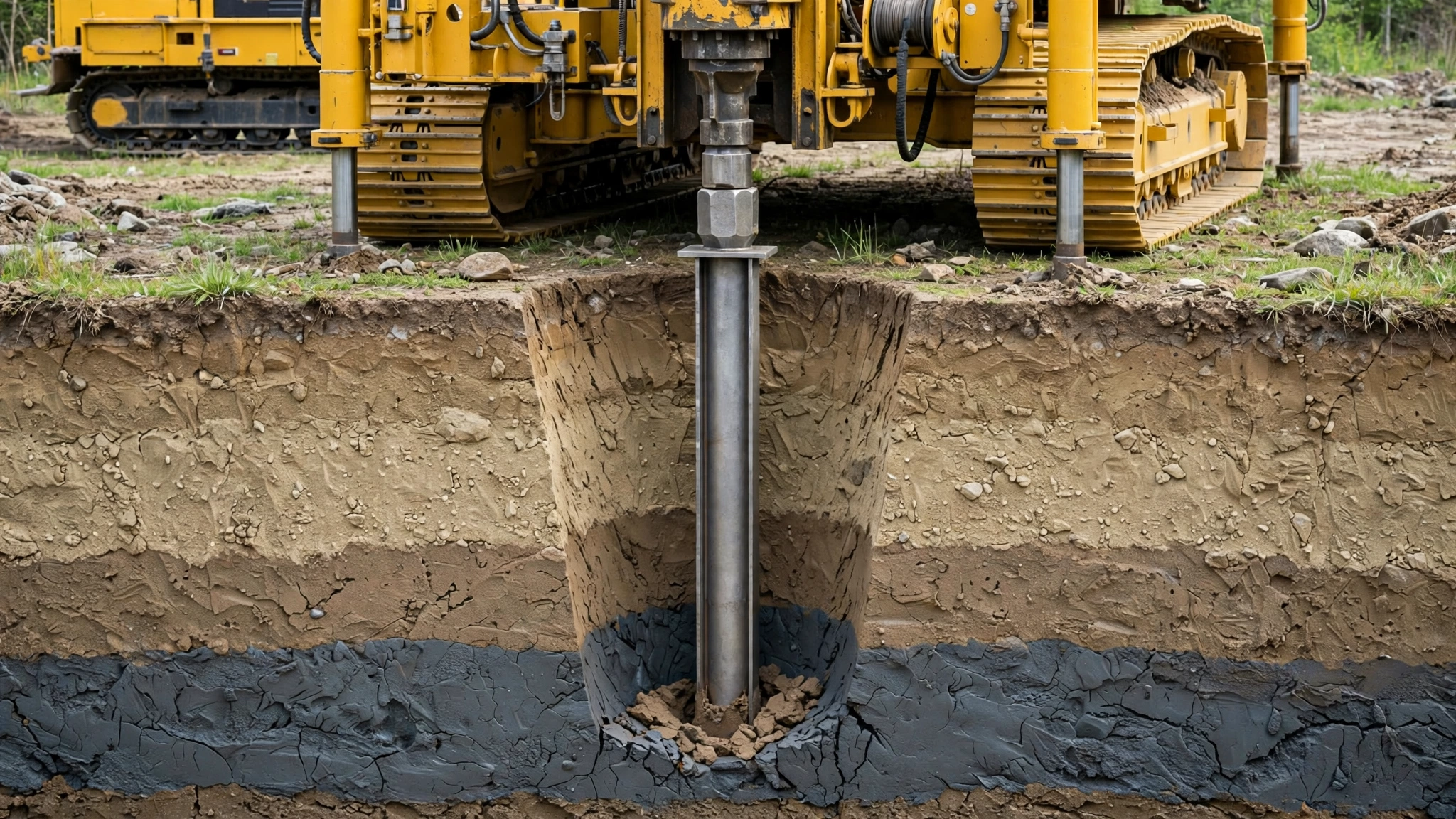
Impact hammers work better in clay. The pounding force pushes through the sticky soil. Rotary drilling also works. The auger cuts through clay without the vibration problems.
Clay presents another challenge. It can grab the pile and hold it tight. Skin friction builds up fast. Sometimes the pile gets stuck before reaching bearing depth. Pre-drilling or jetting can help with that.
Mixed Soils
Many sites have mixed soil conditions. Sand on top of clay. Clay with gravel pockets. Layers that change every few feet.
Mixed conditions are unpredictable. Driving through them is a gamble. Rotary drilling offers more control. The auger cuts through whatever comes up.
Impact driving in mixed soil requires careful monitoring according to the Pile Driving Soil Guide. Blow counts can jump around. The operator needs to watch closely and adjust as needed.
3. The Water Table Changes Everything
Groundwater affects pile driving more than most people realize. Sometimes the water table is deep. Sometimes it is right at the surface. Either way, it matters in every Pile Driving Soil Guide.
What Happens Below the Water Table
When the pile goes below the water table, everything changes. The soil becomes saturated. Friction changes. Blow counts behave differently.
Saturated sand loses its strength. The pile moves through it more easily. But the blow count does not give reliable bearing information. The water masks what is really happening.
Saturated clay can cause problems too. The pile displaces water as it goes down. That creates pressure that can push other piles sideways. Heave becomes a real concern.
Checking Groundwater Levels
Before the job starts, find out where the water table sits. Drill test holes. Measure the water level. Understand how deep the water goes.
Some sites have seasonal water table changes. Wet season brings the water up. Dry season drops it down. Plan for the worst case.
Driving Below the Water Table
If the job requires driving below the water table, take precautions. Casing might be needed for bored piles. Jetting can help with driven piles, a standard technique in the Pile Driving Soil Guide.
Monitor blow counts carefully. Do not rely on them alone. Use other methods to verify bearing capacity. Load tests provide real data that blow counts cannot.
4. Soil Testing Is Not Optional
Guessing about soil conditions is a recipe for disaster. Yet plenty of contractors try to save money by skipping proper testing. That decision usually backfires and ruins the rules of a good Pile Driving Soil Guide.
What Testing Tells You
Good testing reveals the soil composition. It shows the bearing capacity. It identifies problem layers. It tells you where the water table sits.
Without testing, the job is a gamble. Maybe the ground is fine. Maybe it is not. Guessing wrong leads to cracked piles, broken equipment, and failed foundations.
Types of Soil Tests
Standard penetration tests are common. A split-spoon sampler gets driven into the ground. The blow count tells you about the soil density.
Core samples provide detailed information. The lab analysis shows exactly what is down there. Grain size, moisture content, shear strength. All useful data for your Pile Driving Soil Guide.
Cone penetration tests are faster than drilling. A cone gets pushed into the ground. Sensors measure resistance. Good for quick site assessments.
When to Test
Test before every job. Even if the site looks familiar. Soil conditions change over short distances. What happened on the last job does not guarantee what happens on this one.
Test at regular intervals across the site. Do not just test one spot. Conditions vary. A complete picture helps avoid surprises, a primary rule of the Pile Driving Soil Guide.
5. Friction and Bearing Are Two Different Things
Understanding the difference between skin friction and end bearing matters for every pile job. It is a critical lesson in this Pile Driving Soil Guide.
Skin Friction
Skin friction is the grip between the pile shaft and the surrounding soil. The soil grabs the pile along its entire length. That grip carries part of the load.
Friction piles rely on this grip. They hang in the soil without reaching bedrock or dense strata. The soil holds them up through friction.
Friction varies with soil type. Clay provides high friction. Sand provides less. Water reduces friction significantly.
End Bearing
End bearing is the support from the pile tip resting on firm ground. The pile reaches a dense layer and stops. That layer carries the load.
End-bearing piles go to refusal. The blow count jumps up suddenly. The pile stops advancing. That is the signal to stop driving.
Which One Matters for the Job
Some piles rely mostly on friction. Others rely on end bearing. Many use a combination of both.
Soil testing reveals which type works best. Soft soil requires more friction. Hard soil provides better end bearing. Matching the pile type to the soil conditions ensures the foundation works. For more depth, refer to the ultimate pile project guide 10 steps from start to finish.
6. Soil Density Changes with Depth
Soil gets denser as it goes down. That is a general rule in the Pile Driving Soil Guide. But the rate of change varies. Some sites have dense soil near the surface. Others have soft soil for hundreds of feet.
Understanding the Layers
Most sites have multiple soil layers. Topsoil on top. Fill material below that. Natural soil underneath. Each layer has different properties.
The pile needs to get through all the soft layers. It needs to hit something solid. That solid layer might be bedrock. It might be dense sand. It might be stiff clay.
Knowing the layers helps plan the job. The operator knows what to expect. The blow count changes make sense because the layers are known, as guided by the Pile Driving Soil Guide.
Planning for Depth
Soil testing reveals how deep the pile needs to go. The bearing layer sits at a certain depth. The pile goes to that depth and stops.
Sometimes the bearing layer is shallow. Other times it is deep. Deep piles cost more and take longer. But they are necessary if the soil requires them.
7. Soil Conditions Change the Equipment Choice
The equipment selection depends on the soil. Use the wrong hammer and the job becomes a struggle. Use the right hammer and everything goes smoothly. The Pile Driving Soil Guide covers this thoroughly.
Matching Equipment to Soil
Sand and gravel call for vibratory hammers. The vibration works with the soil, not against it.
Clay and silt call for impact hammers. The pounding force pushes through the sticky soil.
Rock requires heavy impact or rotary drilling. Nothing else gets through it.
Mixed soil conditions often require rotary drilling. The auger cuts through whatever comes up.
Adjusting for Soil Changes
Soil conditions can change mid-job. What started as sand turns into clay. What looked like clay becomes gravel.
The equipment needs to adapt. Sometimes that means switching hammers. Sometimes it means changing the approach. Having flexibility on the job helps.
8. Wrapping It Up
Soil determines the success of any pile job. Understanding the ground before starting saves time, money, and headaches, which is why a Pile Driving Soil Guide is vital.
Sand behaves differently from clay. Water changes everything. Testing is not optional. Friction and bearing are different. Soil density changes with depth. Equipment must match the conditions.
Every pile job starts with the soil. The best hammers in the world cannot fix bad ground. The best operators cannot overcome poor planning. Get the soil right and the rest follows.
Take the time to understand what is underneath. Drill test holes. Run the tests. Analyze the data using your Pile Driving Soil Guide. Then choose the right equipment and approach.
The job will run smoother. The piles will go in straight. The foundation will be solid. That is what matters in this Pile Driving Soil Guide.
Looking to round out your jobsite fleet? Beyond deep foundation work, many crews also need lifting and access equipment on the same site.
Explore the powerful brand new TYPHON STOMP X1300 25HP Kubota Diesel Mini Skid Steer Loader for safe, efficient operations alongside your foundation crew.
9. Our Business Partners
For more details on heavy machinery and to see our business partners at work, check out the video below:
2 Comments