
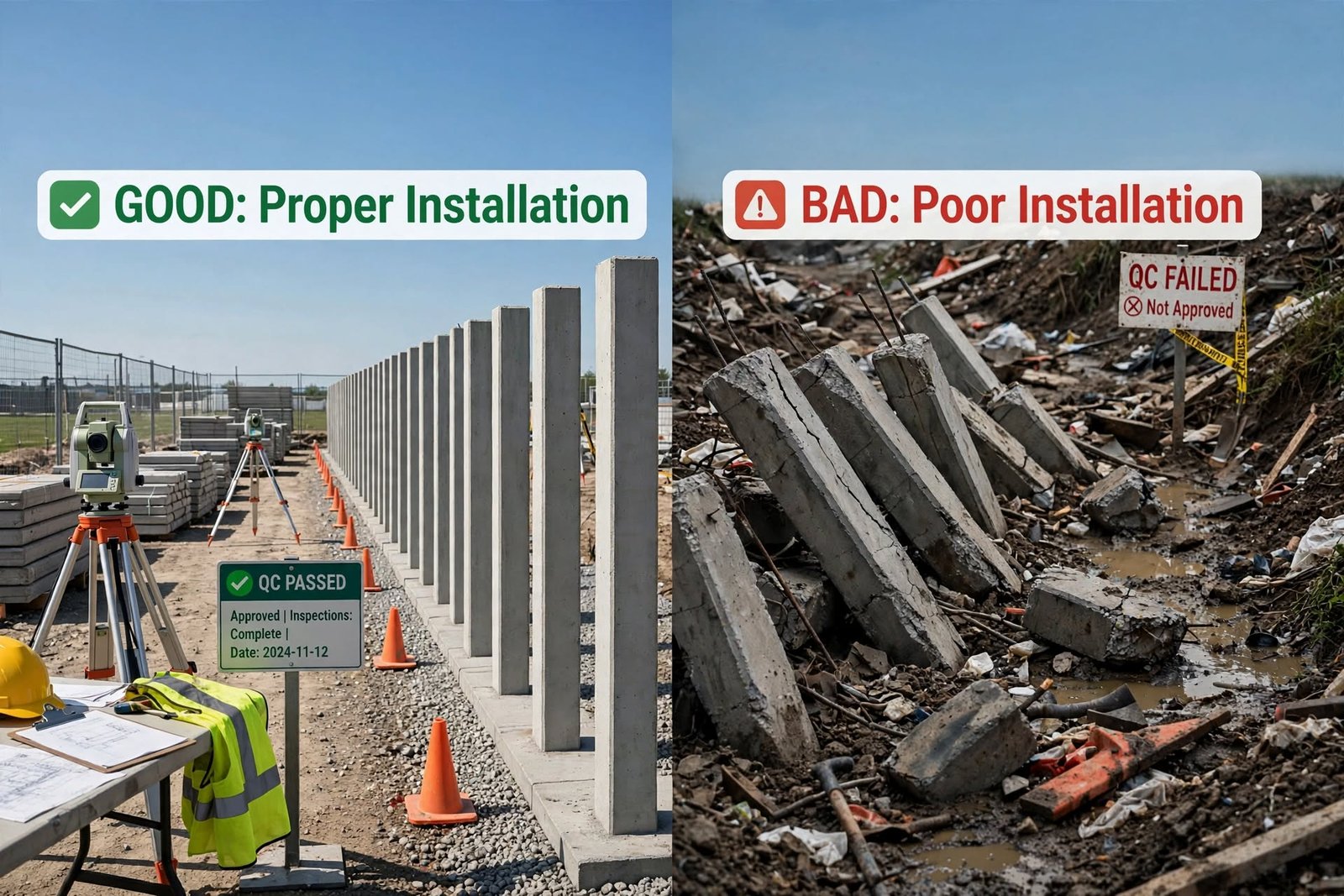
Pile Installation: 6 Things That Separate Good Jobs from Bad Ones

Table of Contents
1. Introduction
Every Pile Installation starts with the same basic idea. Drive a pile into the ground. Reach bearing. Move to the next one. Simple on paper. But anyone who has spent time on a job site knows the truth. Two crews can execute the same Pile Installation on the same site and get completely different results.
One job runs smooth. Piles go in straight. The schedule holds. The other job struggles. Crooked piles. Broken equipment. Missed deadlines. The difference is not luck. It is not the equipment. It is a handful of decisions made along the way.
This Pile Installation piece covers six things that separate good jobs from bad ones. Some are obvious. Others get overlooked until they cause problems. All of them matter.
2. The Quality of Site Preparation
Good Pile Installation starts before the first pile arrives. The site must be ready. Soft ground. Poor access. Cluttered layout. These problems slow everything down.
A bad site shows up in the schedule. The rig sinks into soft soil. The crane cannot reach the pile locations. Piles get stored in the wrong place and have to be moved twice, ruining the flow of the Pile Installation.
What Good Jobs Do
They prepare the site before mobilizing. Soft spots get matted or plated. Access roads get built. Storage areas get cleared. Everything has a place.
They plan the layout. Pile locations get marked. The rig path gets mapped. Piles get staged near where they will be driven. Nothing is left to chance in a professional Pile Installation.
They check the ground conditions. Soft soil under the rig causes settling and misalignment. Timber mats or steel plates distribute the weight. The rig stays stable.
What Bad Jobs Do
They show up and start driving. The rig sinks. The leads go out of alignment. Piles drift. The crew spends the day fixing problems that should have been prevented.
Site preparation takes time. But it saves more time than it costs. A prepared site runs smooth. A neglected site runs on problems.
3. The Accuracy of Alignment
Alignment decides whether a Pile Installation succeeds or fails. A pile that goes in straight carries its load. A pile that drifts cannot.
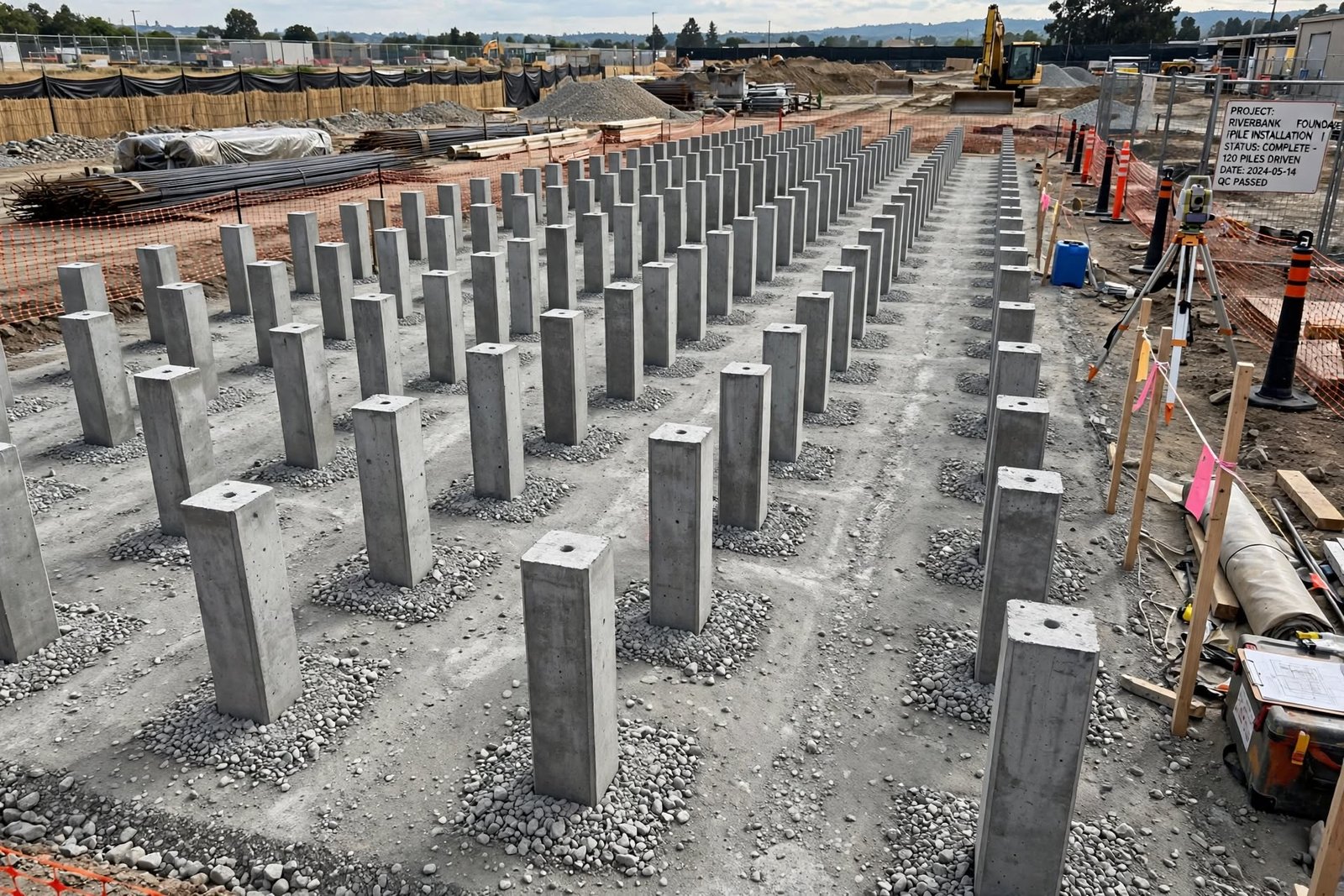
Bad alignment shows up in the records. The pile is out of tolerance. The inspector flags it. The pile gets pulled and replaced. That costs time and money.
What Good Jobs Do
They check alignment constantly. Before every pile. During every pile. The leads are plumb. The helmet is centered. The rig is stable. This is a rule in successful Pile Installation.
They use modern tools. Laser levels. Digital inclinometers. These tools cost little and catch problems early. Guessing at alignment leads to drift.
They fix problems immediately. If a pile starts to drift, they stop. They realign. They start again. Catching drift early prevents bigger problems later.
What Bad Jobs Do
They check alignment once and assume it stays. Leads shift. Rigs settle. Small angles become big drift. The pile goes in crooked.
Alignment is not a one-time task. It is continuous. Good Pile Installation requires constant attention. The crews that maintain alignment get straight piles. The crews that do not get crooked ones.
4. The Handling of Blow Counts
Blow count tells the story of what is happening underground. Rising blow count means denser soil. Falling blow count means softer soil. Erratic blow count means problems during the Pile Installation.
Good crews read the story. They adjust when needed. Bad crews ignore the numbers and keep driving.
What Good Jobs Do
They record blow counts at regular intervals. Every foot. Every meter. No gaps. The data shows what the pile is doing.
They watch for changes. A sudden jump means an obstruction. A sudden drop means a soft layer. Both require investigation.
They stop when something looks wrong. Driving through a problem makes it worse. The pile cracks. The hammer breaks. The Pile Installation stops.
What Bad Jobs Do
They drive until the pile stops. They do not track blow counts. They do not notice the signs. When the pile cracks, they do not understand why.
Blow count is not just a record. It is a live readout of the Pile Installation. Good crews read it constantly. Bad crews ignore it until it is too late.
5. The Condition of Equipment
Equipment breaks. That is a fact. But how often it breaks and how long it stays broken is something crews control during a Pile Installation.
A broken hammer stops the Pile Installation. The crew stands around. The schedule slips. The budget bleeds.
What Good Jobs Do
They maintain equipment before it fails. Cushions get replaced on schedule. Cables get inspected daily. Hydraulic fluid gets checked every shift.
They keep spare parts on site. Cushions. Hoses. Filters. Small parts cause big delays when they fail. Having spares means quick repairs.
They listen to the equipment. The hammer has a sound. The winch has a sound. When the sound changes, something is wrong. Good operators investigate immediately.
What Bad Jobs Do
They run equipment until it breaks. They skip maintenance to save time. They ignore warning signs. When the hammer fails, they wait for parts.
Equipment condition separates good Pile Installation from bad. Well-maintained equipment runs longer. It drives more piles. It keeps the job moving.
6. The Management of Crew Training
A trained crew works. An untrained crew struggles. The difference shows up in every task of the Pile Installation.
Trained crews know how to align the leads. They know how to check cushions. They know how to read blow counts. They do not need constant instruction.
What Good Jobs Do
They train before the job starts. New workers get paired with experienced ones. Procedures get explained and practiced. Everyone knows their role.
They cross-train. The pile handler can check alignment. The ground crew can inspect cushions. When everyone can do multiple tasks, the work flows smoothly.
They invest in safety. Trained crews follow safety rules. They know the hazards. They prevent accidents that stop the Pile Installation.
What Bad Jobs Do
They hire whoever is available. They assume workers know what to do. They skip training to save time. Mistakes happen. Accidents happen. The job stops.
Crew training is not optional. It is part of Pile Installation. A trained crew installs piles faster and safer. An untrained crew costs more in mistakes and delays.
7. The Approach to Documentation
Documentation seems boring. But it decides whether the Pile Installation passes inspection. It decides whether the client accepts the work.
Good records prove the job was done right. Bad records leave questions. Questions cause delays. Delays cost money.
What Good Jobs Do
They record everything. Pile locations. Blow counts. Set measurements. Equipment inspections. Safety meetings. All of it goes into the log.
They keep records organized. A binder with tabs. A digital file with folders. Everything easy to find. The inspector does not wait.
They review records before inspection. Look for gaps. Fix them before the inspector finds them. Good records make sign-off easy.
What Bad Jobs Do
They scribble numbers on scrap paper. They lose the log. They cannot prove the Pile Installation met the spec. The inspector delays sign-off. The job cannot close.
Documentation is part of Pile Installation. It is not separate. Good crews document as they go. Bad crews try to recreate records after the fact.
8. Wrapping It Up
Pile Installation separates good jobs from bad ones. Site preparation. Alignment accuracy. Blow count management. Equipment condition. Crew training. Documentation.
These six things do not cost much. They do not require special equipment. They require discipline. The crews that build these habits complete a Pile Installation faster and safer. The crews that ignore them struggle. Keep learning how to avoid issues by reading pile driving planning 6 steps to avoid delays on site.
Every Pile Installation is a chance to do it right. Start with preparation. Maintain alignment. Watch the blow count. Take care of equipment. Train the crew. Document the work.
Good jobs are not accidents. They are the result of good decisions made throughout the Pile Installation. Make those decisions and the job succeeds.
Looking to round out your jobsite fleet? Beyond deep foundation work, many crews also need lifting and access equipment on the same site.
Explore the powerful TYPHON Terror IV ProPact Series 9000-lb Mini Excavator with Kubota D1703 3-Cylinder Diesel Engine for safe, efficient operations alongside your foundation crew.
9. Our Business Partners
For more details on heavy machinery and to see our business partners at work, check out the video below: