
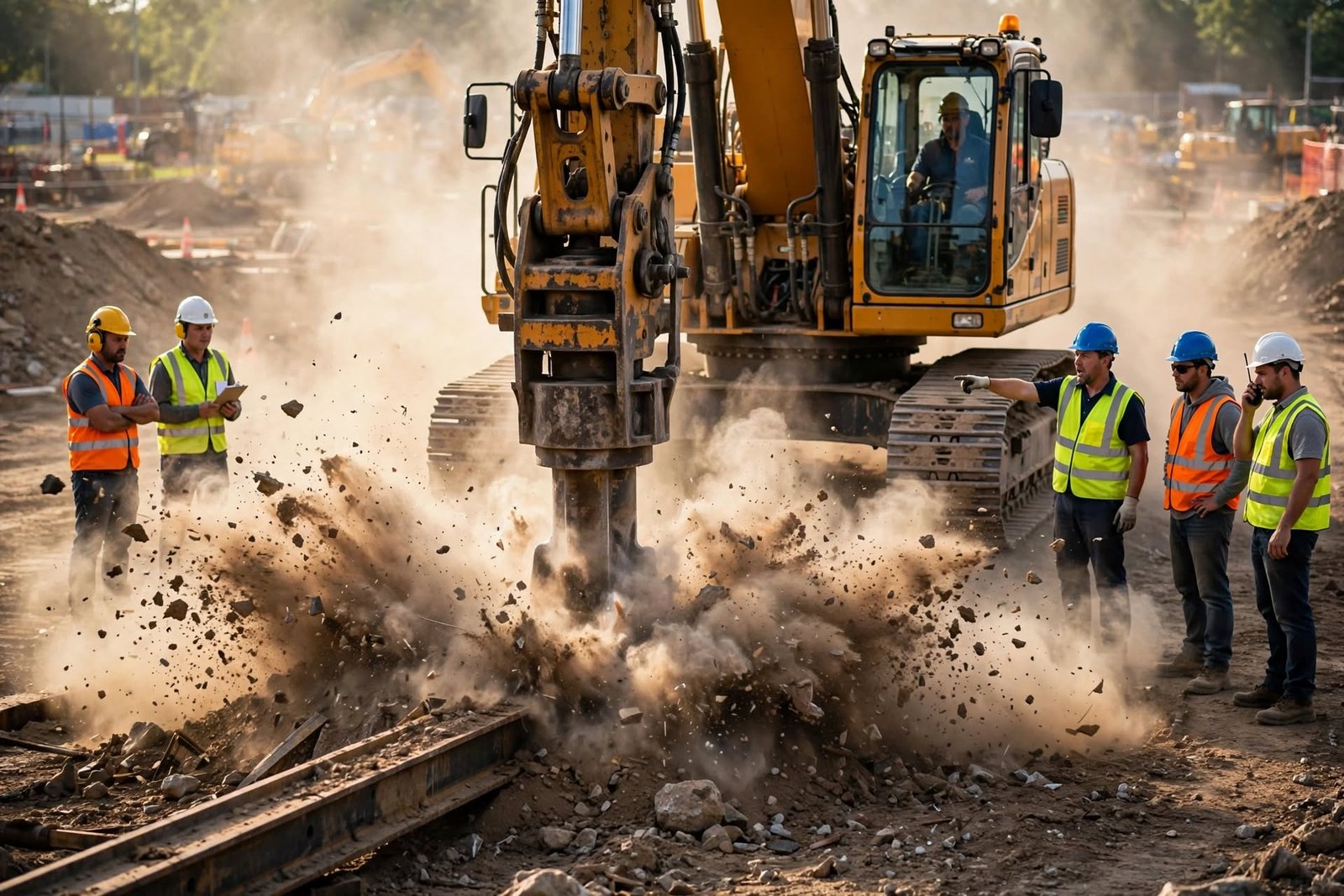
Pile Driving Productivity: 6 Habits That Double Daily Output

Table of Contents
- 1. Introduction
- 2. Plan the Pile Sequence Before the First Blow
- 3. Keep the Rig Moving with Minimal Repositioning
- 4. Maintain Equipment Before It Breaks
- 5. Train the Crew to Work Without Constant Supervision
- 6. Minimize Downtime Between Piles
- 7. Track Output and Adjust in Real Time
- 8. Wrapping It Up
- 9. Our Business Partners
1. Introduction
Every Pile Driving Productivity discussion starts on the job site, not in an office. A crew plans to drive thirty piles in a day. By lunch, they have done eight. By quitting time, maybe fifteen. The schedule slips. The budget bleeds. Nobody understands why.
The answer is rarely the equipment. It is rarely the soil. Most of the time, poor Pile Driving Productivity comes down to habits. Small routines that crews either build or ignore. The crews that drive twice as many piles are not working twice as hard. They are working smarter.
This Pile Driving Productivity piece covers six habits that separate high-output crews from the rest. Some are obvious. Others get overlooked. All of them make a measurable difference in overall Pile Driving Productivity.
2. Plan the Pile Sequence Before the First Blow
Most crews start driving wherever the rig happens to be parked. That is a mistake. The sequence of piles matters more than most people realize when assessing Pile Driving Productivity.
Driving piles in the wrong order causes ground heave. Piles that were already driven rise up or shift sideways. The crew has to re-drive them. That wasted time adds up fast and ruins Pile Driving Productivity.
High-output crews map the pile layout before mobilizing. They identify the best starting point, usually the center or the stiffest soil. They work outward in a pattern that lets the soil displace evenly.
They also group piles by location. Moving the rig takes time. Driving all the piles in one area before moving to the next cuts down on repositioning. A crew that plans the sequence can save an hour or more per day, instantly boosting Pile Driving Productivity.
The sequence also affects how quickly piles reach bearing. Driving in soft soil first can cause problems later. High-output crews understand the soil and plan accordingly.
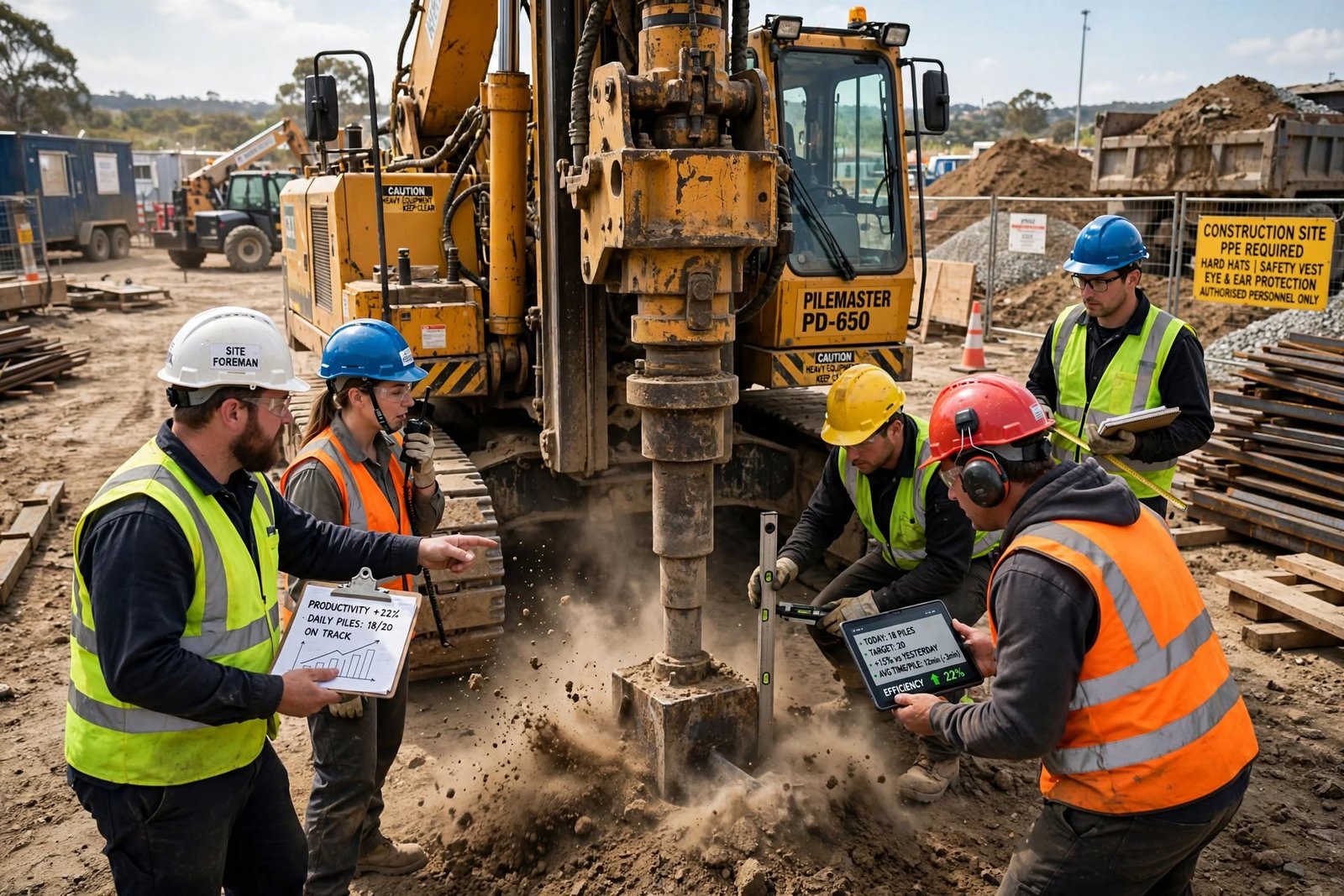
Planning the sequence is not complicated. It takes thirty minutes with the drawings and a marker. That thirty minutes saves hours over the course of the job. The crew knows where to start. They know where to go next. They do not waste time deciding.
The best crews also plan for contingencies to maintain their Pile Driving Productivity. What happens if a pile refuses early? What happens if the soil changes? Having a backup plan keeps the job moving when the unexpected happens.
3. Keep the Rig Moving with Minimal Repositioning
The rig is the most expensive piece of equipment on site. Every minute it sits idle costs money. Every time it moves, Pile Driving Productivity drops.
Inexperienced crews reposition constantly. Drive a pile here. Move the rig. Drive a pile there. Move again. The day disappears in a series of small moves.
High-output crews plan the rig position to reach multiple piles without moving. The leads are set up to cover a radius of pile locations. The operator drives every pile within reach before repositioning, a core strategy for high Pile Driving Productivity.
They also prep the next pile while the current one is being driven. The pile handler brings the next pile into position. The ground crew checks alignment. Everything is ready when the hammer finishes.
This kind of preparation takes coordination. But it turns idle time into productive time. A crew that masters this habit can double output without working faster.
The key to excellent Pile Driving Productivity is communication. The operator knows which pile is next. The ground crew knows where to position it. The pile handler knows where to place it. Everyone works together. No one waits for instructions.
Moving the rig is sometimes unavoidable. But the best crews minimize it. They plan the work to keep the rig in one spot as long as possible. When they do move, they move efficiently. Everything is ready before the move starts.
4. Maintain Equipment Before It Breaks
Breakdowns kill Pile Driving Productivity. A hammer that stops working brings the whole job to a halt. The crew stands around while repairs get made. Hours disappear.
Most breakdowns are preventable. Worn cushions. Frayed cables. Low hydraulic fluid. These problems give warning signs. Crews that ignore those signs pay the price.
High-output crews perform preventive maintenance on a schedule. Cables get inspected daily. Cushions get replaced before they fail. Hydraulic fluid gets checked every shift. Small problems get fixed before they become big ones.
They also keep spare parts on site. Cushions. Hoses. Filters. Having spares means quick repairs. Waiting for a part to arrive can cost a full day of Pile Driving Productivity.
The maintenance habit does not take much time. Fifteen minutes at the start of a shift. A few minutes during breaks. That small investment pays off in uptime.
Preventive maintenance also extends equipment life. A well-maintained hammer lasts longer than one that gets abused. The cost savings add up over time. Better equipment means better Pile Driving Productivity.
The best crews track maintenance in a log. They know when parts were replaced. They know when service is due. Nothing gets forgotten. Nothing gets missed.
5. Train the Crew to Work Without Constant Supervision
A crew that needs constant instruction is a slow crew. Every question stops the work. Every decision waits for the foreman. Pile Driving Productivity crawls.
High-output crews know their jobs. They do not wait for instructions. They see what needs doing and do it.
These crews invest in training. New workers get paired with experienced ones. Procedures get explained and practiced. Everyone knows their role and how it fits with everyone else.
They also cross-train. The pile handler can check alignment. The ground crew can inspect cushions. When everyone can do multiple tasks, the work flows smoothly and boosts Pile Driving Productivity.
The foreman’s job shifts from giving instructions to solving problems. The crew handles the routine work. The foreman focuses on the bigger picture.
This habit takes time to build. But once it is in place, the Pile Driving Productivity gains are massive. A trained crew works like a machine. Everyone knows what to do. Everyone does it without being told.
Training also improves safety. A crew that knows the equipment and the procedures is less likely to make mistakes. Fewer mistakes mean fewer accidents. Fewer accidents mean fewer delays.
The best crews never stop training. They review procedures. They practice emergency drills. They learn from every job. The investment in training pays off every single day.
6. Minimize Downtime Between Piles
The time between piles is where Pile Driving Productivity gets lost. The hammer stops. The pile gets moved. The rig repositions. The next pile gets aligned. By the time driving starts again, ten minutes have passed.
Ten minutes does not sound like much. Multiply it by thirty piles. That is five hours of lost time. A whole shift disappears.
High-output crews treat the time between piles as part of the job. Every task gets planned. The next pile is ready before the current one finishes. The hammer is inspected during the transition. The alignment is checked while the pile is being positioned. This defines high Pile Driving Productivity.
They also streamline the process. The pile handler knows exactly where to place the next pile. The ground crew knows exactly what to check. No one stands around waiting for instructions.
Small improvements add up. Saving two minutes per pile saves an hour over thirty piles. That hour gets used for more piles. The daily output climbs.
The best crews also look for bottlenecks. What takes the most time between piles? Is it positioning? Is it alignment? Is it inspection? Find the bottleneck. Fix it. Watch Pile Driving Productivity climb.
Technology helps too. Laser alignment tools speed up positioning. Digital records reduce paperwork time. Anything that saves minutes per pile adds up over a full day.
7. Track Output and Adjust in Real Time
You cannot improve what you do not measure. Crews that track their output understand where time gets wasted. Crews that do not track output never improve their Pile Driving Productivity.
Most crews have a rough idea of how many piles they drove. But rough ideas do not drive improvement. Detailed tracking does.
High-output crews record everything. Piles driven per hour. Time per pile. Delays and their causes. Blow counts and set times. All of it goes into a log.
They review the log at the end of each shift. Where did time get lost? What caused the delays? What can be improved tomorrow to increase Pile Driving Productivity?
They also adjust in real time. If output drops, they figure out why immediately. If a particular pile takes too long, they investigate. If the hammer starts acting up, they address it before it fails.
Tracking output creates accountability. Everyone knows the numbers. Everyone works to improve them. The habit becomes part of the culture.
The best crews share the numbers with everyone. The operator knows how many piles were driven. The ground crew knows the target. Everyone works toward the same goal. When the numbers improve, everyone celebrates. When they slip, everyone looks for solutions.
Tracking also helps with bidding. A crew that knows its Pile Driving Productivity can bid more accurately. They know how long a job will take. They know what it will cost. That knowledge wins jobs and protects margins.
8. Wrapping It Up
Doubling Pile Driving Productivity does not require working harder. It requires working smarter. The six habits in this Pile Driving Productivity piece are simple. Plan the pile sequence. Keep the rig moving. Maintain equipment. Train the crew. Minimize downtime. Track output.
None of these habits are complicated. But they require discipline. Crews that build these habits drive more piles with less effort. Crews that ignore them struggle to meet the schedule. To better understand how to fix common delays, check out the pile driving problems guide 7 common issues and how to solve them.
Start with one habit. Get it right. Add another. Over time, the Pile Driving Productivity gains compound. A crew that drives fifteen piles a day starts driving thirty. The schedule gets easier. The budget looks better. The job gets done right.
That is the power of good habits.
Looking to round out your jobsite fleet? Beyond deep foundation work, many crews also need lifting and access equipment on the same site.
Explore the powerful TYPHON NAGA 4.0 Mini Excavator with 4-Ton 24.4HP Yanmar Diesel Engine, Metal Track, ISO/SAE Control Switch, A/C & Heater Cabin, and 2 Travel Speeds for safe, efficient operations alongside your foundation crew.
9. Our Business Partners
For more details on heavy machinery and to see our business partners at work, check out the video below: